Credit Union Marketing
Account Openings I Can Trace
Credit union marketing built so each account opening and loan application shows the page, search or ad that brought it, with every claim checked before it publishes. I make no promises about how many members join, only about what I can measure.
★★★★★ 5-star rated on Google · 14 years · 300+ Las Vegas businesses

Trusted By
















How Credit Unions Make Money
Members, loans and deposits
A credit union is a member-owned cooperative. It earns from the spread between the loans it makes and the deposits it holds, and it returns what it earns to members as lower loan rates, higher savings rates and fewer fees. Each member is also an owner with a vote, which is why the field of membership is written into the charter and why who can join matters so much to the business.
The economics depend on members who stay. A checking account that is opened, used for years and paired with a car loan or a mortgage is worth far more than a single loan application that is declined. The marketing question is therefore not only who opened an account this month, but which members stayed, borrowed again and brought a family member in.
Because the institution is not owned by outside shareholders, the board measures success in member value, capital strength and service. Marketing that only chases deposit volume can work against that goal.

Member Acquisition Versus Retention
Two jobs, two budgets
Acquisition brings in new members. Retention keeps the ones who already belong and deepens the relationship. The two need different messages, different channels and different numbers, and a single blended report hides which one is working. I keep them separate in the plan and in the readout.
Most of the lift comes from the second and third product, not from the first account. A member who has a checking account and a car loan is harder to lose, so the retention work belongs in the plan from the first month.
Member acquisition and retention are different jobs. Acquisition pays for new accounts, while retention keeps the members who already bank with you. A campaign that counts only new accounts can look strong while the branch sees the same members leave. The plan tracks both, so the readout shows where marketing changes the membership count.
| Part of the job | What it asks for | What I track |
|---|---|---|
| Acquisition | New members who meet eligibility and open an account | Account openings by source and product |
| Activation | A first deposit, a direct deposit or a card in use | Accounts active at day 30 and day 90 |
| Deepening | A second product such as a loan or a savings goal | Members with two or more products, by cohort |
| Retention | Members who stay and keep their accounts open | Attrition by cohort and by branch or channel |
Credit Union Marketing Spend That Cannot Be Traced
Impressions with no account opened
Most credit union marketing reports impressions, clicks and form fills. The report stops before the application, and the application stops before the account is funded. A credit union can spend on a rate campaign for a whole quarter and still not know whether the people who responded opened anything, or whether they were already members who saw the same offer twice.
Without that line, the marketing budget is defended on activity rather than on accounts. The board asks what the spend produced, and the honest answer is a set of clicks. I build the tracking so the answer is a count of applications started, applications completed and accounts funded, by source.
A useful test is simple. For each campaign, the team should be able to name the number of accounts it produced, the cost of those accounts and the date the readout confirmed them.

Field of Membership in Credit Union Advertising
Who is eligible to join
A credit union's charter defines who may become a member, whether that is a common employer, a geographic area, an association or a community. An ad that implies anyone can join when membership is restricted creates a complaint and a compliance problem. The ad has to state eligibility accurately, and the landing page has to explain the next step for someone who does not qualify.
I keep an eligibility line in every campaign brief, copied from the charter language your team approves, so a banner, a search ad and a social post all say the same thing about who may join.
Field of membership questions also come up on the phone and in branch lobbies, so the script and the landing page should match the ad word for word. A mismatch between the ad and the teller line is one of the first things a reviewer notices.

Credit Union Advertising Rules
Rates and terms stated accurately
Three federal rules shape most credit union ads. The NCUA's advertising rule in 12 CFR Part 740 requires the insured-status notice and bars statements that misrepresent federal share insurance. The Truth in Savings rule in Regulation DD governs how deposit rates and fees are advertised, including the annual percentage yield. The Truth in Lending rule in Regulation Z sets the terms that must appear when a credit ad mentions a payment, a rate or a down payment.
These are marketing considerations, and I am not giving legal advice. I put the required disclosure next to the claim in every draft, and I flag any rate or term that lacks a current source. Whether a particular ad is compliant is your compliance officer's and your counsel's decision.
Local ads that mention a branch, a promotion or a rate also need the same care as national ads. The team should keep one current product sheet that every channel draws from.
Compliance Review for Credit Union Marketing
A review step before each launch
Every credit union I would work with has a review path before anything goes public. I build the work around that path rather than around a shortcut. Each piece moves through the same steps, and each step leaves a record that the compliance team can open later.
Review is faster when the drafts arrive complete. Each draft I send includes the source document for every number, the date the number was last checked and the channel it will run on, so the reviewer does not have to hunt for the support. Review time is shorter when the questions are answered before the draft lands on a desk.
When a reviewer asks for a change, I make it in the draft, log the reason and resend the full piece. The launch log then shows the path from first draft to final approval, which is the record a examiner or auditor asks to see.
- A draft with the claim, the disclosure and the source listed beside it
- A check of the rate or term against the current product sheet
- A review of the eligibility language against the charter
- Sign-off from the compliance officer, recorded with the date
- A launch log naming the channel, the page and the end date

How Members Choose a Credit Union
From first search to open account
A person choosing a credit union usually compares rates, fees, branch access and how easily the account opens online. The search may start with a bank that raised its fees or a neighbor who recommended a local branch. Each step is a place the person can drop off, so the tracking has to cover the whole path.
Trust shows up early in the path. Reviews that mention a named branch employee, a clear fee schedule and a phone number that gets answered all shape whether a person moves to the application. I track which pages those visitors read before they start, so the team knows which pages do that work.
Members choose a credit union by a short list of practical checks: whether they qualify, where the branches and ATMs are, how the app works and whether the rates shown are current. The website answers those checks on the first screen, and the field of membership is explained without jargon so a visitor can tell quickly whether to continue.
| Step | What the person does | What I track |
|---|---|---|
| Search or referral | Looks up credit unions or hears a name | Source of the first visit |
| Rate and fee check | Compares savings and loan pages | Page views by product |
| Eligibility check | Confirms they can join | Eligibility answers by source |
| Application start | Begins the account or loan form | Starts by product and source |
| Funded account | Completes the application and funds it | Accounts funded by source and product |
Account Opening Funnel Tracking
Each application traced to its source
A digital account opening form is the most important page on a credit union site, and it is also the page where most people stop. I put a source field on every application start, so the team can see which page, search or ad brought the people who began, which ones finished, and which ones were funded.
The readout shows the drop-off at each stage. A form that loses half its starters at the identity step needs a different fix than a form that loses them at the funding step, and the owner should see that difference in one table.
Mobile applications need their own check. A form that works on a desktop but asks for too many steps on a phone is a common cause of stalled starts, and the readout shows that gap by device as well as by source.

Credit Union Loan Product Pages
Auto, home and personal loan pages
Each loan product gets its own page with the terms, the eligibility, the required disclosures and one application path. A visitor looking for an auto loan does not want to read about a mortgage first, and a mixed page dilutes the disclosure a regulator will look for.
I track each product page to its own application starts. When a rate changes, the product sheet and the page change together, and the compliance log records the date. Stale rates on a page are one of the fastest ways for a credit union to create a complaint.
Each page also names who the loan is for, how the application works and what documents the member should have ready. Members who arrive prepared finish faster, and the page is the cheapest place to make that preparation easy.
Member Data Privacy in Marketing
Member data stays out of ad tools
Member information is covered by the privacy rules that apply to financial institutions, including the NCUA privacy rule in 12 CFR Part 716 that carries the Gramm-Leach-Bliley Act requirements for credit unions. Account data does not go into an ad audience, a third-party pixel or a marketing list without a documented basis and the approval of the compliance team.
I set up tracking that counts applications by source without sending personal details to an ad platform. Where a platform needs a match, the match runs on approved, hashed data reviewed by the compliance team, and the decision is written in the launch log.
The privacy notice, the cookie banner and the tracking tags should describe the same data in the same words. When they disagree, the mismatch is what a reviewer finds first, so I check them against each other before launch.
Member Referral Program Rules
Referral offers with clear terms
A member referral program can bring in new members who already trust the institution, and it can also create rules problems if the offer is unclear. The terms have to say who qualifies, what the reward is, when it is paid and what the referred person must do. An offer that is vague about any of those is a complaint waiting to happen.
I build the referral page and the tracking so each referral carries the member's code and the new account's source. The readout shows referrals that opened an account and referrals that were paid, so the cost of the program is visible against the accounts it produced.
I also set a review date for every referral offer. A program that ran well last spring may not match the current product terms, and the date forces a fresh look before it runs again.
Branch Locator and Service Pages
Branches, ATMs and hours
A member who searches for a branch wants the address, the hours, the ATM nearby and a phone number they can call from the parking lot. I build a page for each branch with those facts written in plain text, so the page is useful on a phone and readable by search engines.
Each branch page carries one request path, such as a call to that branch or an appointment request, and the source is tracked into the branch's own readout. Hours that change for a holiday get updated the same day, because a wrong hour on a branch page costs a visit that was already decided.
Each branch page also names its accessibility features, such as parking, a ramp and an accessible teller station, only where the branch has confirmed them. A claim the branch cannot back is removed before it reaches the page.
Credit Union Marketing Services
Most credit unions start with one of three pieces. Each card opens the full page for that service, with how I run it and what the team gets at the end.
Each piece can be bought alone or as part of one plan. The plan shows the order I would build them in, with the compliance review placed before each launch.
I build each piece to fit the team's existing core system and review steps, so nothing needs to be rebuilt when the plan moves to the next product.
What I run for credit unions
Credit union website design
Product pages, a branch locator and an account opening path built for accessibility and tracked to each application start.
Read more →Credit union advertising
Product campaigns kept inside the review path and measured to applications started and accounts funded.
Read more →Web design for local businesses
The Las Vegas web design work that sits behind this page, with the booking and tracking approach I use for every client.
Read more →When Credit Union Demand Shifts
Tax season and rate cycles
Credit union demand moves with the calendar. Many members make larger deposits, pay down debt or apply for a loan around tax refund season, and home and auto buying follow their own cycles through the year. A rate change from the Federal Reserve can also shift the products members ask about within a week.
I plan each campaign backward from the date it needs to be live and from the compliance review it needs to clear. A spring campaign has its review scheduled earlier than the launch, so a rate change does not land on a page that was approved for last month's terms.
The calendar also changes which channel is worth the money. Search tends to carry the early research, while email and branch signage carry the decision in the last week before a deadline. The plan assigns each channel its season.
Closest Credit Union Work I Have
No credit union client claimed
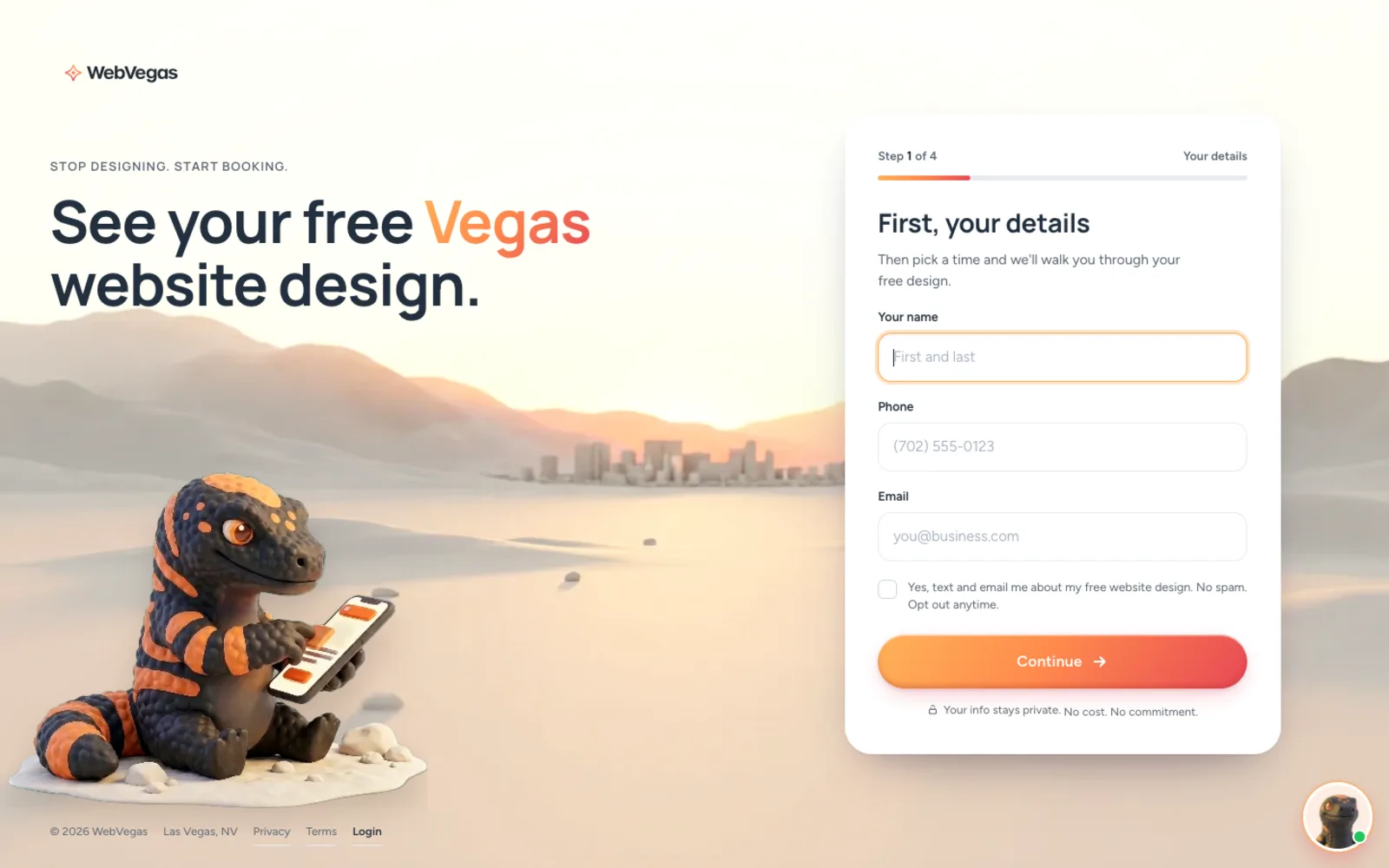
I do not have a credit union case to show you, and I will not claim one. The closest build is WebVegas, my own Las Vegas web design brand, which uses a four-step booking form that hands each lead a free design walkthrough. It is a web design business, not a financial institution. What I bring to a credit union is the process: a written scope, a compliance review path and a readout that counts accounts, not clicks.
If a credit union asks for a case study, I will show the web design work above and explain what it was. I will not present a web design brand as a banking result.
The closest credit union work is described with its starting point, the approval steps and what was measured. Where a result depends on a branch or program change outside the marketing plan, the page says so, so a board member reading the case can judge its scope.
Builds I Can Show You
Work I built, live where you can check it
Website build · Las Vegas
WebVegas: a Las Vegas web design brand and its booking funnel
I designed and built webvegas.io, a Las Vegas web design and SEO brand: the site, a four-step booking form that hands each lead a free design walkthrough, and the brand behind it.
See the live sitePortfolio Examples
More of the work
Website build · Henderson
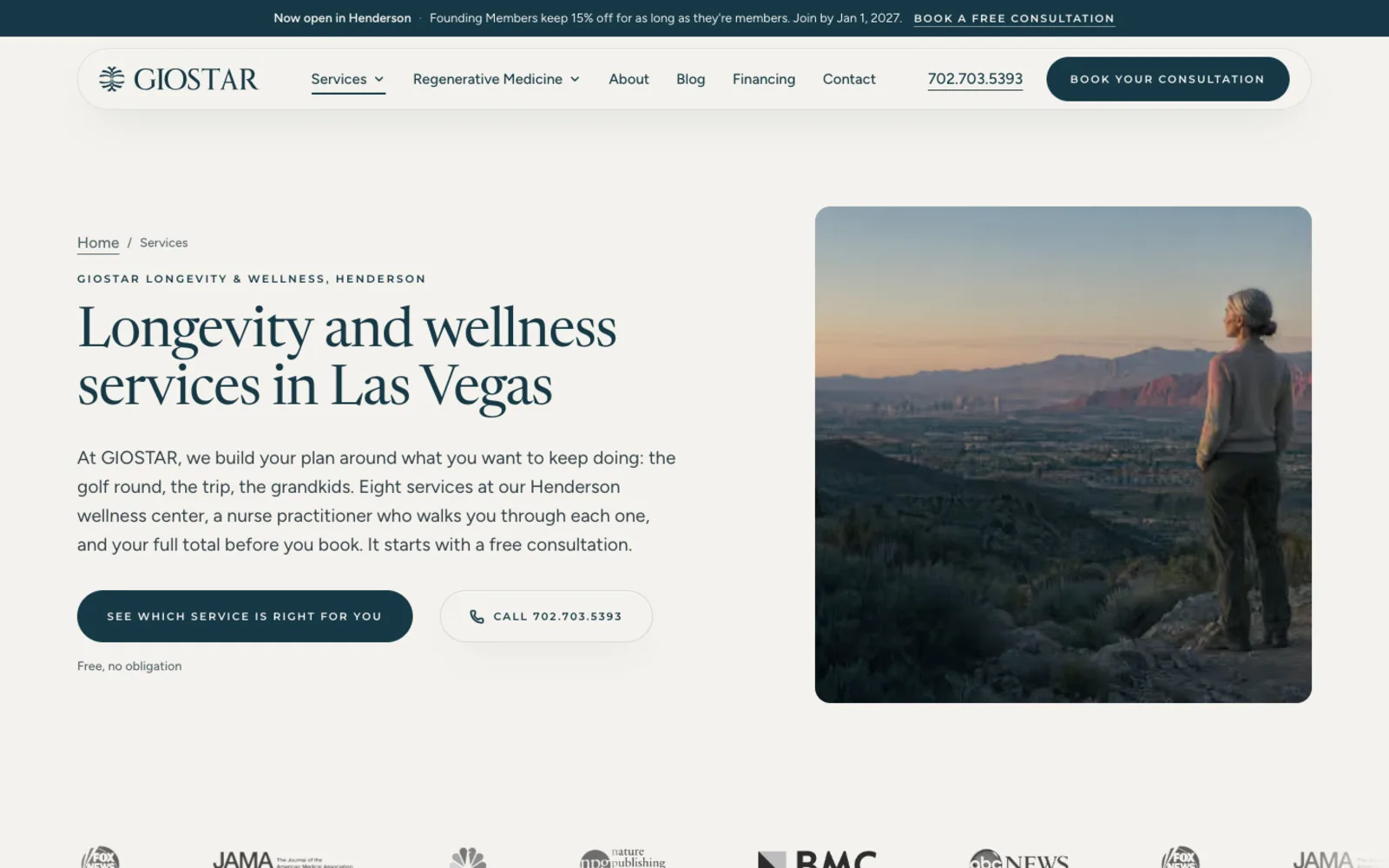
GIOSTAR: the clinic website, booking and lead tracking
See the live site

Brand mark · Event venue
Desert Inn Oasis: the refined mark and the plan for the new site
Site in build

Brand identity · Pharma
Mili Pharma: the butterfly mark and the lockups
Site in build
Social content system
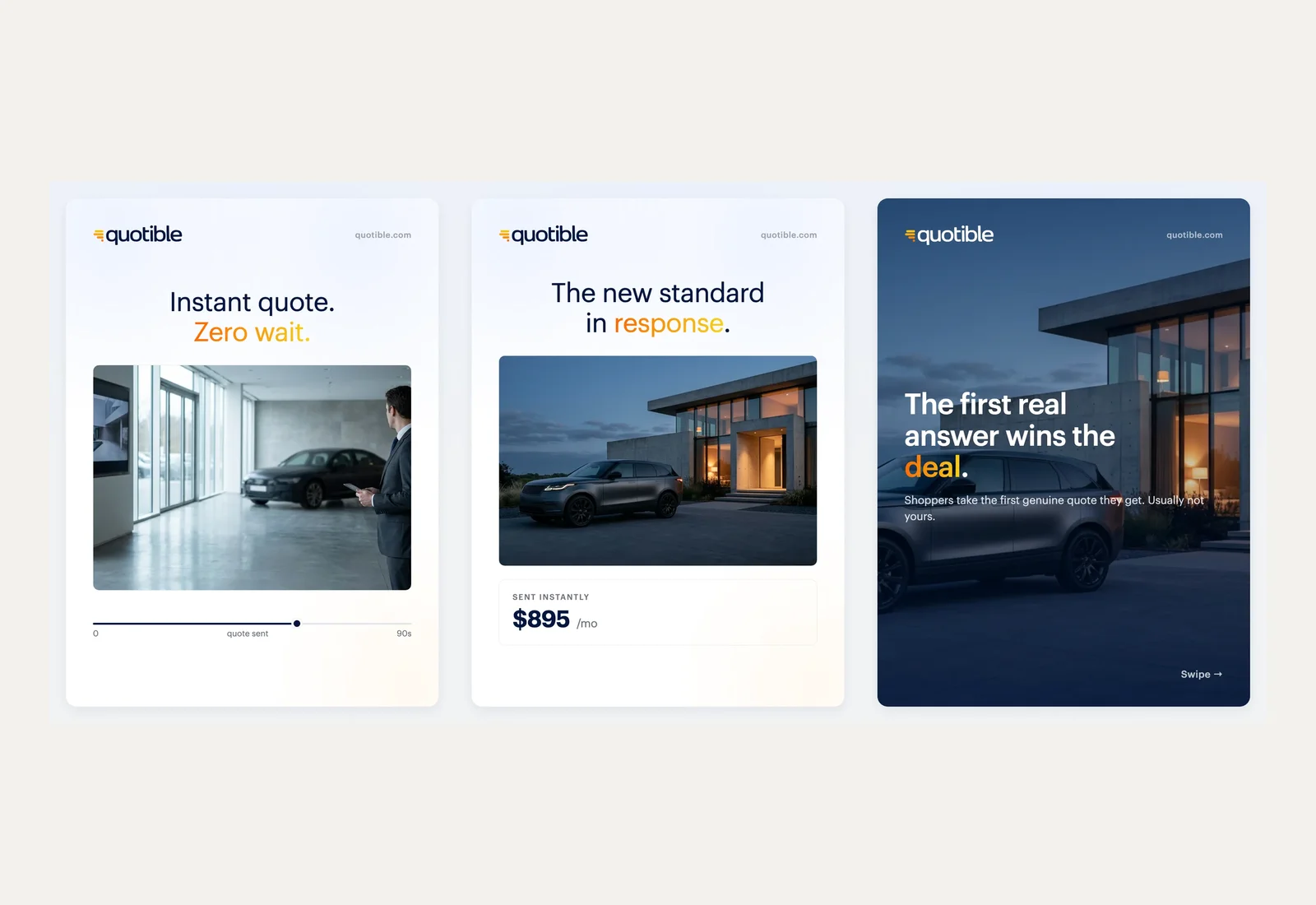
Quotible: a testimonial-led social series
Content system

Want me to look at your site first?
A free audit, and a same-day reply from Justin, personally.
Reviews From Google
What clients wrote on Google
- ★★★★★
After going back and forth on whether to bring in outside help, we ended up working with Justin for some AI consulting on how to structure our operations. He laid out a clear plan, didn't overcomplicate it, and we've been running smoother since. Good fit for a service business. He knows Las Vegas and he knows this stuff.
Kristen S. · Google
- ★★★★★
Justin joined our team a few months before opening to replace a marketing agency that wasn’t performing. He stepped up fast. Within weeks he launched a fully redesigned website with new brand guidelines, built and delivered our marketing plan and AI strategy, and helped implement our system architecture so we could open on time. Since then, he’s made several critical enhancements to the site that helped us generate revenue in our first month. His engagement was supposed to end at opening, but he became such an integral part of our leadership team that we kept him on to help evolve our marketing and tech strategy as we grow. He’s easy to work with, pushes back when it matters, and moves easily between strategy, delivery, and operations depending on what’s needed. If you’re looking for a deeply experienced, knowledgeable, and dedicated marketing, AI, or technology consultant, I highly recommend Justin Harris AI Consulting.
Devin R. · Google
- ★★★★★
Justin has been a true Gem to have as part of our company. His professionalism, immediate attention to branding and extensive details in marketing has made so much improvement on our business. We are forever grateful to have such and amazing marketing asset and cannot thank you enough Justin!
Desi W. · Google
- ★★★★
Justin Harris was very helpful in resolving some issues we had with our Webflow website.
Kristy F. · Google
- ★★★★★
I had the pleasure of working alongside Justin and consistently saw firsthand the level of dedication and professionalism he brings to his work. He was always the first one in the office, setting the tone with his strong work ethic and commitment to excellence. What stood out most was how deeply he cared about every client. He approached each project with thoughtfulness, expertise, and a genuine drive to deliver meaningful results. He combines sharp technical knowledge with a practical, solutions-oriented mindset, which makes him especially effective in the AI space. Any organization looking for thoughtful, reliable, and highly skilled AI consulting support would be in great hands working with him!
Jenevine Y. · Google
- ★★★★★
Hired him to manage our AI systems and it's been pretty smooth. He knew what needed to be done and got it handled without a lot of back and forth. Good experience for our service business.
BC G. · Google
- ★★★★★
I follow Justin on social media and read about his work and his contributions to the AI industry. He really knows how to use the technology in creating a system that allows you to make your business work more efficiently and effectively.
Ana J. · Google
- ★★★★★
Justin was the person I would go to for advice about AI automation for my workload. He knew the subject well and didn't overcomplicate it. For anyone in Las Vegas running a service business and wondering if AI systems are worth looking into, talking to him first is a great move!
Yaneliz M. · Google
- ★★★★★
Working with Justin is always a pleasure. He is professional, trustworthy, and consistently delivers outstanding results. As a longtime Las Vegas local, he has an exceptional knowledge of the territory and truly understands the market. I highly recommend his services to anyone who is serious about growing their business!
k C. · Google
- ★★★★★
From what I've seen, Justin knows the AI automation space better than most people I've come across in Las Vegas. He's the kind of person who actually understands the technical side and can explain it without making you feel lost. Good guy, good reputation.
Afaryn F. · Google
- ★★★★★
I've Known Justin for a while now and he really knows his stuff when it comes to AI consulting. If people in Las Vegas were to ask me for recommendations in this space, he's the best guy for the job, hands down.
Mickey S. · Google
- ★★★★★
After going back and forth on whether to bring in outside help, we reached out to Justin for some AI consulting advice on where our service business could actually use automation. He was straightforward about what made sense and what didn't. Ended up being a useful conversation. Las Vegas has no shortage of people claiming to be experts, and he's one of the few who could back it up.
Vincent M. · Google
- ★★★★★
Known Justin for a few years now and the guy actually knows his stuff when it comes to AI automation. Friends in the Las Vegas service business space keep asking me who to call and I always point them his way.
Chris M. · Google
- ★★★★★
Justin is one of those guys who actually knows what he's talking about and doesn't cut any corners. Will definitely be working with him again.
David S. · Google
- ★★★★★
Justin knows what he's doing highly recommend using his service he will treat you right and give you tremendous value !👍
Gregory J. · Google
- ★★★★★
Known Justin for a many years and the guy actually knows what he's talking about when it comes to AI and automation. Not the type to just throw buzzwords around. Based in Las Vegas and well connected in the space. …
cindy D. · Google
- ★★★★★
Known Justin for a few years now. Guy knows the AI space better than most people I've come across, especially here in Las Vegas where there's no shortage of people claiming to be experts. He actually understands how AI automation works at a practical level, not just the theory. The kind of person who gives you a straight answer with kindness and patience
Katelyn H. · Google
- ★★★★★
Knew Justin before he started building AI systems for businesses, and watching what he's put together is genuinely impressive. He built out an AI automation setup for my website in Las Vegas and it changed how we handle leads completely. The guy actually runs this stuff himself, so he knows what works.
Justin E. · Google
Credit Union Marketing Reports
The readout a CEO can check
Every line can be checked against your core system and your product records. I report on accounts funded and loans booked, not on raw impressions or clicks.
The readout arrives in the first week of each month, with the raw application export attached so the team can check any line against the core system.
Each line in the readout also names the data source, so a reviewer can trace it back without asking the team.
The monthly report covers new accounts by product, funded accounts, referral activity and the approved disclosures that changed during the month. Each figure has a source, and each marketing change is written beside the number it aims to move, so the next review starts from a question rather than a chart.
| Monthly line | What it shows | Who checks it |
|---|---|---|
| New accounts by product | Openings from the site, by product and branch | Marketing lead with the branch manager |
| Funded accounts | Openings that completed the funding step | Operations team |
| Referral activity | Referrals sent, accepted and funded | Member services lead |
| Disclosure changes | Pages updated and the approval that cleared them | Compliance officer |
| Branch locator traffic | Visits to branch and ATM pages | Marketing lead |
How a Credit Union Engagement Runs
Scope, set up, read, adjust
Each step has an owner and a date, and the team can see the status of every step without asking for it.
- Step 01
Scope the products and the charter
I review the products, the eligibility language and the compliance path, then write the scope and the fixed price before any spend starts.
- Step 02
Set up the tracking first
The source field, the application events and the funded-account match go in before any ad runs, so each account carries its origin.
- Step 03
Launch through review
Pages and campaigns go live only after the compliance sign-off is on file, with the launch logged by channel and date.
- Step 04
Read accounts each month
Each month I read the accounts funded and the applications that stalled, and I send one plain readout to the team.
- Step 05
Change one thing at a time
I change one campaign or page per cycle, so the team can see what moved the number and what did not.
What Moves a Credit Union Marketing Quote
Scope, not a price list
I quote a fixed price for a written scope after I have reviewed your products, your channels and your compliance path. A single product with one review contact is a different job from a multi-branch institution with several product lines and a legal review on every ad. These are the factors that move the number, so you can judge any quote, mine included.
Once the scope is written, the fixed price holds unless the scope changes. A change to the charter, the product list or the review path gets written down first, and the team approves it before any new work starts.
Credit union demand moves with tax season, rate changes, payroll cycles and the opening of new branches. A plan that carries those dates in a shared calendar can schedule approvals and ad flights before the window opens, so the team is not reviewing copy in the busiest week of the quarter.
| Visitor question | Where the page answers it | What to check |
|---|---|---|
| Do I qualify? | Field of membership on the first screen | Wording matches the charter |
| Where is a branch? | Locator with hours and ATM notes | Each listing is current |
| How do I open an account? | Step list with the documents needed | Documents match the application |
| Are the rates current? | Dated rate pages with the approved disclosure | Approval date on each page |
| Can I use the app? | App page with sign-in steps | Screens match the released version |
Credit Union Marketing Questions
Answers before you hire me
Credit Union Compliance and Claims
What I will and will not publish
Who Does the Credit Union Marketing Work
One person from scope to readout
I am Justin Harris. I have built websites and run digital marketing for Las Vegas businesses for fourteen years, and I still do the work myself. When you hire me, you talk to the person who reviews the charter, writes the drafts and reads the accounts. There is no hand-off to a junior team in the middle.
You own the domain, the hosting and every login, and your team can change a product page or a branch hour without calling me.
When a compliance review needs a change, you hear about it from me before the piece runs, with the reason written down.
Every decision on the account is written down in the same plain language the team uses, so a new hire can pick up the file without a briefing.
The work is done by one person who reads the account numbers, edits the pages and writes the disclosure notes. Every change passes through the compliance officer's approved list before it goes live.
Credit Union Marketing Across the Valley
Where I meet credit union teams
Las Vegas
89030 · 89101 · 89102 · 89104 · 89106 · 89107 · 89108 · 89109 · 89110 · 89117 · 89124 · 89128 · 89129 · 89130 · 89131 · 89134 · 89138 · 89143 · 89144 · 89145 · 89146 · 89149 · 89166
Henderson
89002 · 89005 · 89011 · 89012 · 89014 · 89015 · 89044 · 89052 · 89054 · 89074 · 89120 · 89122 · 89123 · 89183
North Las Vegas
89030 · 89031 · 89032 · 89081 · 89084 · 89085 · 89086 · 89101 · 89115 · 89130
Summerlin
89128 · 89134 · 89135 · 89138 · 89144 · 89145 · 89148 · 89161
Spring Valley
89102 · 89103 · 89113 · 89117 · 89118 · 89146 · 89147 · 89148 · 89178
Paradise
89074 · 89102 · 89103 · 89109 · 89118 · 89119 · 89120 · 89121 · 89123 · 89158 · 89169 · 89183
Enterprise
89113 · 89118 · 89119 · 89123 · 89139 · 89141 · 89148 · 89178 · 89179 · 89183
Sunrise Manor
89104 · 89110 · 89115 · 89121 · 89122 · 89142 · 89156
Boulder City
89005 · 89044
Proof, not promises
Case studies I can show you
Owning Page One Las Vegas: A Self-Learning Local SEO System
Local SEO in Las Vegas done as a self-learning system: many small automated hammers that fix onsite drift, build citations, and earn AI-search citations. Built and run on my own site first.
Read the case studyA Quality-Management System for a Regulated Stem-Cell Clinic, Firewalled From the Parent Brand
How I built a regulated-clinic management system for GIOStar: a quality-management spine plus EHR integration, with patient data firewalled from the marketing CRM.
Read the case studyAn AI Front Desk That Answers in Two Languages
A bilingual AI receptionist in Las Vegas that answers the phone and the chat in English and Spanish, books the job, and never leaves a lead on hold. Per-client isolated.
Read the case studyOther Industries I Build For
Firms and trades beside credit unions
Free Credit Union Marketing Review
A written read of the account path
Send me your current website, your product pages and a recent application log, and I will reply with the tracking gaps and review steps I would close first.