SaaS Marketing
Marketing Measured by Activation
SaaS marketing for founders whose growth runs on trials, activation and retention, not on traffic. I build the marketing so each channel is judged on the trials and paid accounts it produces.
★★★★★ 5-star rated on Google · 14 years · 300+ Las Vegas businesses
Trusted By
















How a SaaS Company Makes Money
Trials, paid accounts and expansion
A software company earns in a sequence. A visitor becomes a trial or a demo request, the trial becomes a paid account when the product proves its value, and the paid account either stays, grows or leaves.
Revenue recurs, so an account is worth how long it stays and how much it expands, not only what it paid at signup.
Recurring revenue changes what marketing should measure. A single sale is no longer the goal; the goal is a trial that becomes a paid account and an account that stays. Each campaign is judged on the stage it moves.

What Changes for Marketing
The question is paid accounts
A signup that never activates costs money and brings no revenue. The useful question for every channel is how many of its trials reached the first meaningful action in the product, and how many of those became paying accounts.
That changes what marketing is for. It is judged on the accounts it adds and keeps, not on the volume of visits it sends.
A channel that brings in visits but no activated trials is reporting activity, not growth. The same channel judged on paid accounts can look very different, and that is the reason to measure it on the accounts.
Churn, expansion and trial conversion replace the usual lead count as the core numbers. The marketing plan names which of those numbers each channel is expected to move, so the monthly review has a clear target.
Where SaaS Marketing Loses Ground
Traffic that never activates
The common failure is a marketing team that reports traffic, signups and cost per signup while the product team reports activation and churn. Both are true, and neither explains the other.
Spend rises, signups rise, and the paid base barely moves. The founder cannot tell whether the problem is the channel, the page, the onboarding or the product itself.
The fix starts with one shared funnel that both teams read. Once the product events sit beside the channel data, the question changes from which campaign got the most signups to which one produced accounts that activate.
Most lost ground happens between the trial start and the first useful action in the product. A clear first-session path, an email that points to the next step and a help article for the sticking point usually recover more signups than a new ad campaign.

SaaS Funnel Stages
Six stages, six measures
| Stage | What it means | What marketing measures |
|---|---|---|
| Visit | A visitor reads a page about the product | Source and page of each visit |
| Trial or demo | A visitor starts a trial or asks for a demo | Trial starts by channel and page |
| Activation | A new user reaches the first useful action | Activation rate for each source |
| Paid account | A trial converts to a paying account | Trial to paid conversion by channel |
| Retention | The account stays and keeps using the product | Churn and retention by acquisition source |
| Expansion | The account adds seats, plans or modules | Expansion revenue traced to the campaign that brought the account |
Which SaaS Channels Earn Their Place
Each channel has a job
A channel earns budget by adding paid accounts that activate. Reach alone does not qualify it.
Search
Buyers searching for a product category, a comparison or a problem, with pages written to that question.
Content and SEO
Articles and pages that answer the questions a buyer asks before a trial, measured by the trials they start.
Paid search
Captures buyers already searching, measured against trial starts and activation rather than clicks.
Paid social
Reaches a defined audience, and works best when the product has a clear user and visible proof.
Integration and partner pages
Pages built for the tools the product connects to, where the buyer already spends time.
Email and lifecycle
Onboarding and trial sequences, measured by activation and paid conversion.
Trial and Activation Pages
The page that starts the trial
A trial page has one job: explain the outcome the product delivers, then start the trial with the fewest fields. It names who the product is for, shows the first step a new user takes and states plainly what happens after the trial.
Each page is tracked from the visit to the trial start and, through the product's own events, to activation.
A trial page that promises more than the product delivers brings signups who leave in the first session. Those signups inflate the top of the funnel and lower the activation rate, so the claim on the page is part of the measurement.
Each activation page names the one action a new user should take first, such as importing data or inviting a teammate. Competing calls to action are removed so the trial starts with a clear path. The page is tested against the activation rate it has to move.
Product Metrics Marketing Needs
The numbers the team already has
Most SaaS products already log trial starts, activation events and subscription changes. Marketing rarely reads them. I connect the channel data to those events, so each source has a trial rate, an activation rate and a paid rate.
Reading these numbers weekly, rather than once a quarter, lets the team catch a broken step while it is still cheap to fix.
Marketing needs three product numbers: activated accounts, weekly active use and the feature that predicts a paid upgrade. Those numbers tell the team which trial users are worth a follow-up call.

- Trial starts by source and landing page
- Activation rate by source
- Trial to paid conversion by source
- Churn and expansion by acquisition channel
- Cost per paid account, not cost per signup
Comparison and Use-Case Pages
Answer the shortlist question
A buyer comparing tools reads pages that explain the difference, the use case and the fit. I write comparison and use-case pages that say honestly where the product is the right choice and where it is not.
I do not write pages that claim a competitor's weakness without evidence. An honest page earns the trial that a takedown page loses.
Content That Brings Trials
Articles measured by trials
Content is slow to start and hard to measure unless each piece has a path to a trial. I plan articles around the questions buyers ask in search and on sales calls, link each one to the relevant product page and count the trials each piece starts.
Pieces that bring no trials are revised or retired, not left to pile up.
Pricing and Trial Pages
The page read just before the trial
The pricing page is where a shortlisted buyer decides whether the trial is worth starting. It should state the plans in plain terms, name the use case each plan fits and show the trial step first.
Plan limits and prices are set by the company. I build the page around whatever the company sets and do not invent numbers for it.
Pricing pages are written to answer the buyer's next question, such as which plan fits a team of five or how a seat change is billed. Each answer is checked against the billing system so the page never promises something the product cannot do.
Onboarding and Lifecycle Email
The first week decides activation
A trial lives or dies in its first days. Onboarding email should lead a new user to the first useful action, with one step per message and a link back into the product.
Each sequence is measured by activation, not by open rate. A message that gets opened and never leads to an action is revised, because the paid account depends on the action.
The sequence also needs a stop rule. Once a user reaches the activation event, the emails that teach the first step end, and the messages that teach the next use case begin.
Lifecycle email runs on the user's actual progress. A new user who has not connected a data source gets a different message from one who has, and both messages stop as soon as the next step is done. Each sequence has a stop rule written beside it.
Retention and Expansion Marketing
Accounts that stay and grow
Marketing does not end at the paid account. Retention depends on the account using the product, and expansion depends on the team inside it finding the next use case. Both are marketing problems when the messages, the in-product prompts and the success content are written to them.
Retention and expansion are reported separately from acquisition, so a channel that brings accounts that churn is visible.
A churn report that names the acquisition channel tells the team which campaigns bring accounts worth keeping. That single view changes which channel gets the next budget.
Expansion campaigns start from usage, not from a calendar. When an account hits a limit or adopts a feature that signals readiness, the message explains the upgrade in terms of the work it unlocks. Retention work watches the same signals, so a drop in use triggers a check-in before the renewal date.
Integration and Partner Marketing
Reach buyers where the tool already lives
A buyer who already uses a tool often looks for the product next to it. Integration and partner pages answer that search directly, explain what the connection does and offer a trial from the integration.
They need accurate setup steps, and the product team confirms each one before it is published.
The Closest SaaS Work I Have
The closest work, and what it was not
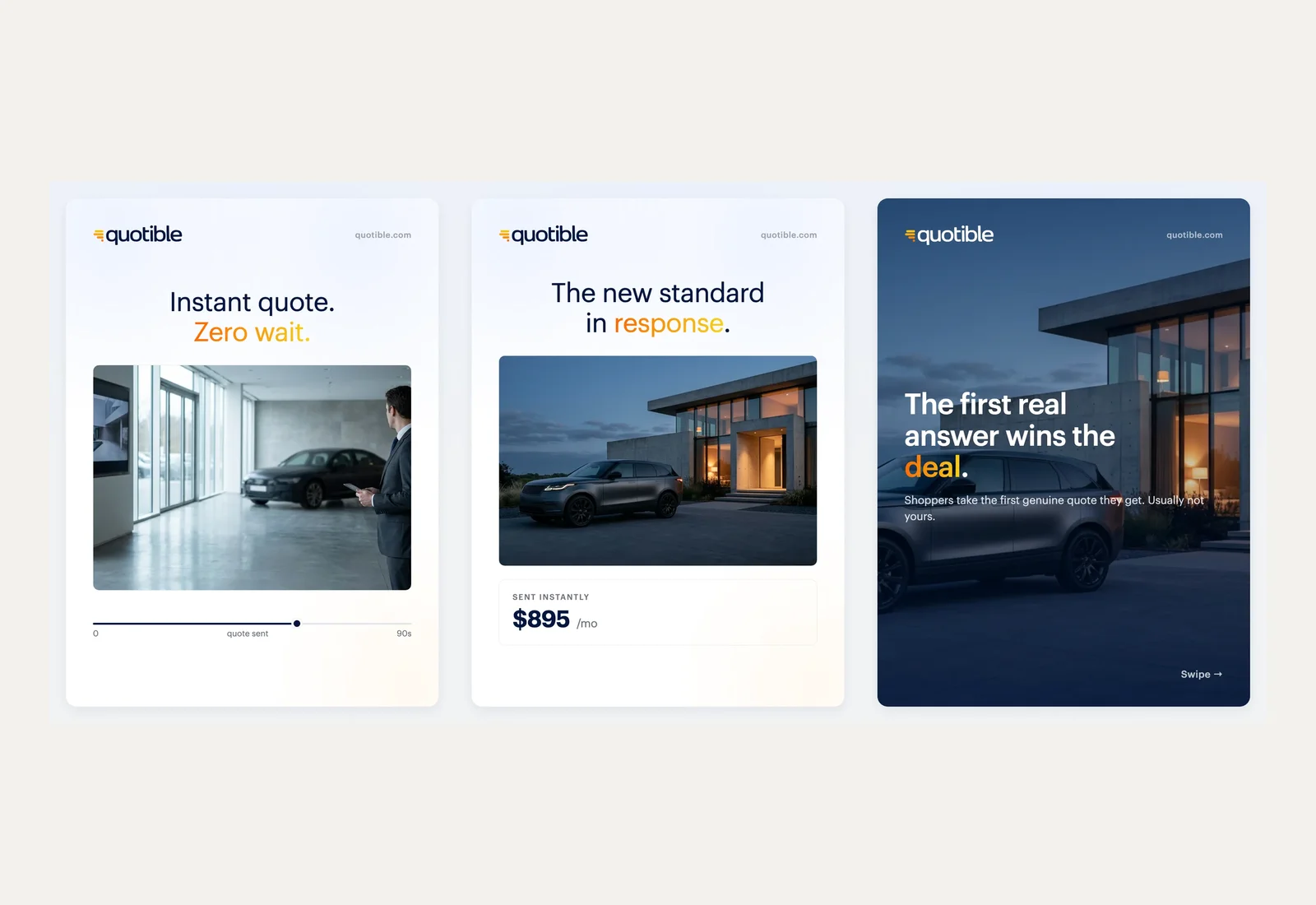
The closest work I have is Quotible, a testimonial software company, for which I built a social content system that turns real customer testimonials into on-brand posts and carousels. That is social content, not paid ads or search results.
I claim no ads or SEO result for any software company, and none of the five builds in my portfolio is a SaaS paid or search campaign.
SaaS Marketing Portfolio
Builds I made, live where you can check
Social content system
Quotible: a testimonial-led social series
For Quotible I built a social content system that turns real customer testimonials into on-brand posts and carousels.
Portfolio Examples
More of the work
Website build · Henderson
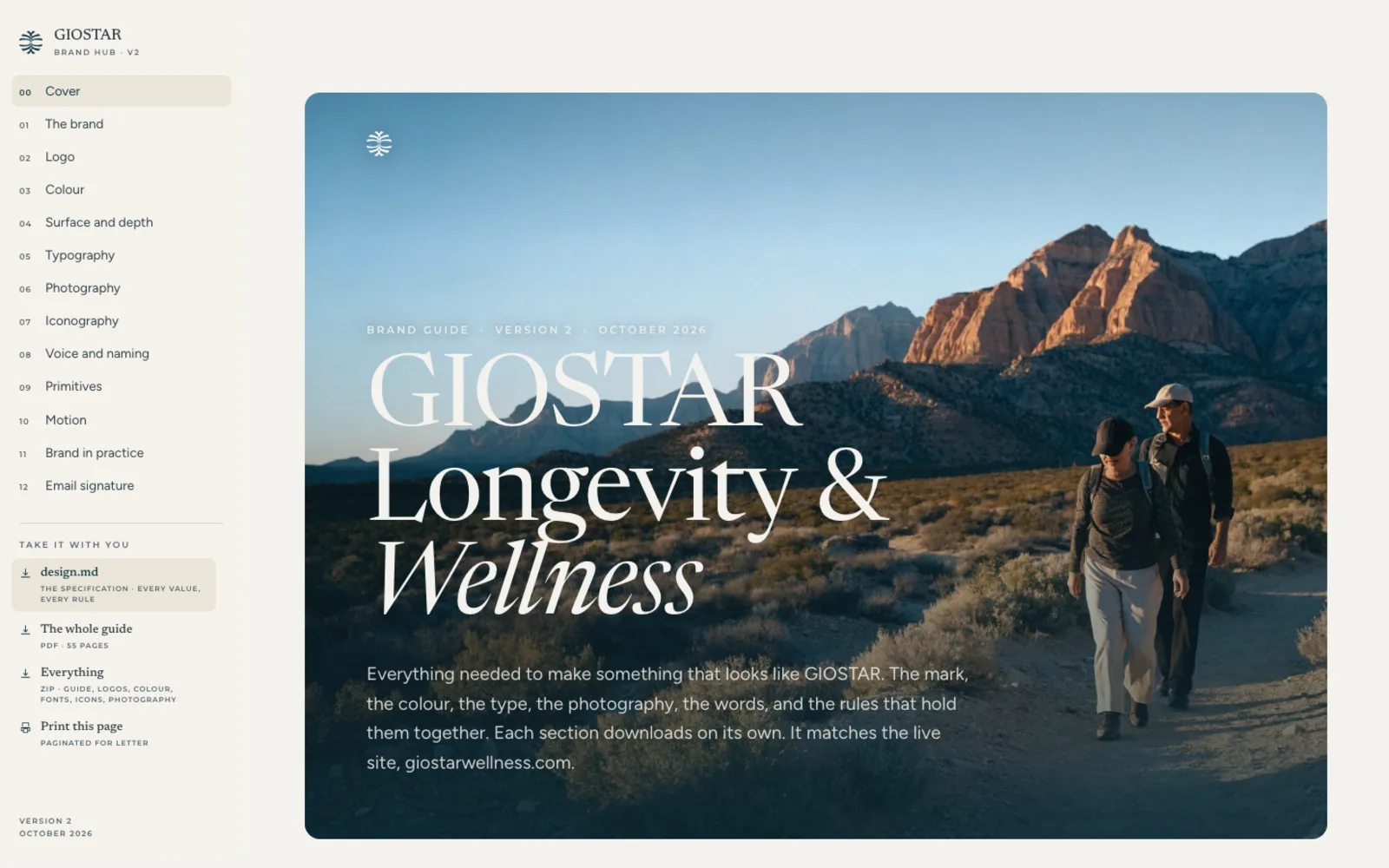
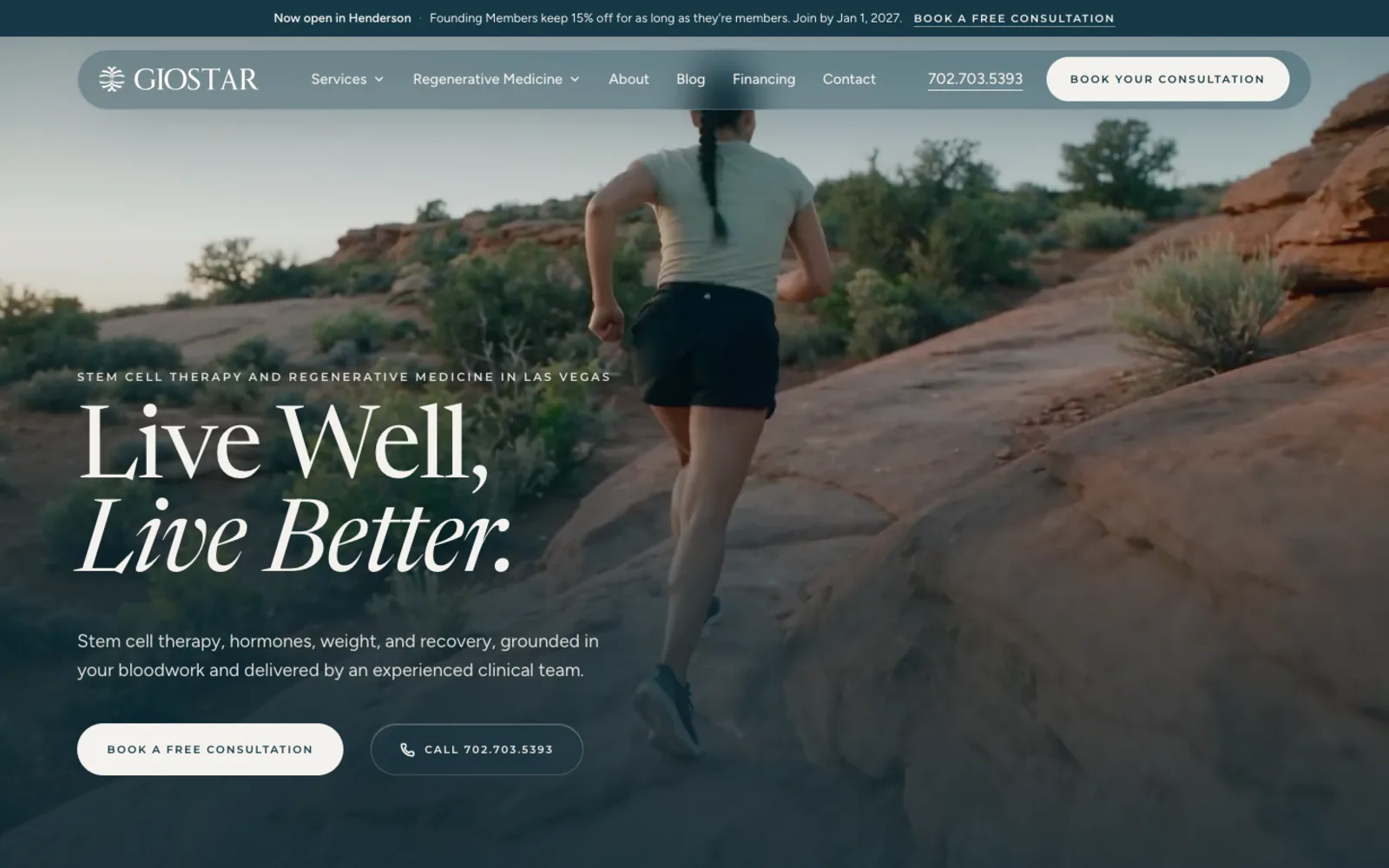
GIOSTAR: the clinic website, booking and lead tracking
See the live site
Website build · Las Vegas
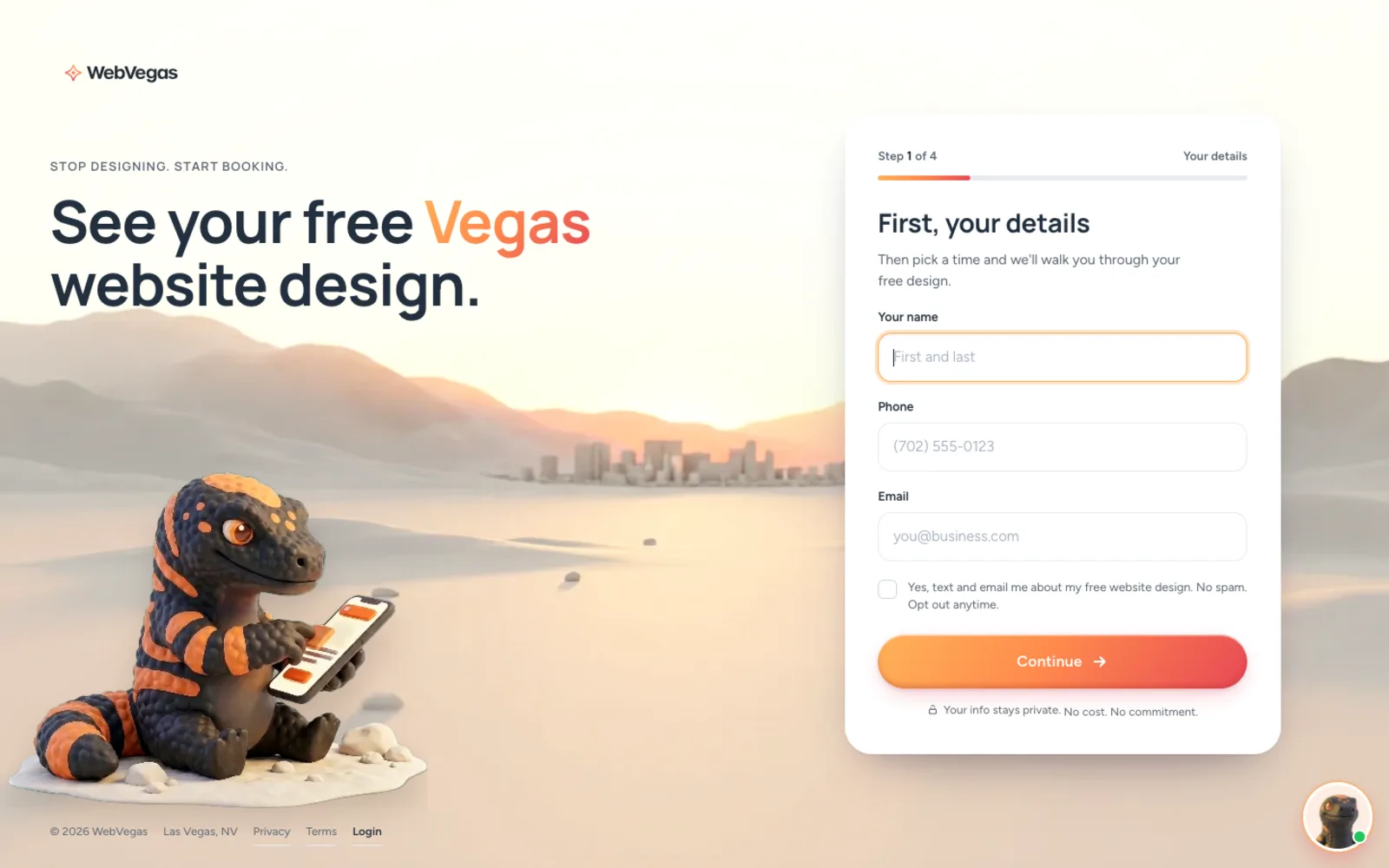
WebVegas: a Las Vegas web design brand and its booking funnel
See the live site

Brand mark · Event venue
Desert Inn Oasis: the refined mark and the plan for the new site
Site in build

Brand identity · Pharma
Mili Pharma: the butterfly mark and the lockups
Site in build

Want me to look at your site first?
A free audit, and a same-day reply from Justin, personally.
SaaS Marketing Reviews
What clients wrote on Google
- ★★★★★
After going back and forth on whether to bring in outside help, we ended up working with Justin for some AI consulting on how to structure our operations. He laid out a clear plan, didn't overcomplicate it, and we've been running smoother since. Good fit for a service business. He knows Las Vegas and he knows this stuff.
Kristen S. · Google
- ★★★★★
Justin joined our team a few months before opening to replace a marketing agency that wasn’t performing. He stepped up fast. Within weeks he launched a fully redesigned website with new brand guidelines, built and delivered our marketing plan and AI strategy, and helped implement our system architecture so we could open on time. Since then, he’s made several critical enhancements to the site that helped us generate revenue in our first month. His engagement was supposed to end at opening, but he became such an integral part of our leadership team that we kept him on to help evolve our marketing and tech strategy as we grow. He’s easy to work with, pushes back when it matters, and moves easily between strategy, delivery, and operations depending on what’s needed. If you’re looking for a deeply experienced, knowledgeable, and dedicated marketing, AI, or technology consultant, I highly recommend Justin Harris AI Consulting.
Devin R. · Google
- ★★★★★
Justin has been a true Gem to have as part of our company. His professionalism, immediate attention to branding and extensive details in marketing has made so much improvement on our business. We are forever grateful to have such and amazing marketing asset and cannot thank you enough Justin!
Desi W. · Google
- ★★★★
Justin Harris was very helpful in resolving some issues we had with our Webflow website.
Kristy F. · Google
- ★★★★★
I had the pleasure of working alongside Justin and consistently saw firsthand the level of dedication and professionalism he brings to his work. He was always the first one in the office, setting the tone with his strong work ethic and commitment to excellence. What stood out most was how deeply he cared about every client. He approached each project with thoughtfulness, expertise, and a genuine drive to deliver meaningful results. He combines sharp technical knowledge with a practical, solutions-oriented mindset, which makes him especially effective in the AI space. Any organization looking for thoughtful, reliable, and highly skilled AI consulting support would be in great hands working with him!
Jenevine Y. · Google
- ★★★★★
Hired him to manage our AI systems and it's been pretty smooth. He knew what needed to be done and got it handled without a lot of back and forth. Good experience for our service business.
BC G. · Google
- ★★★★★
I follow Justin on social media and read about his work and his contributions to the AI industry. He really knows how to use the technology in creating a system that allows you to make your business work more efficiently and effectively.
Ana J. · Google
- ★★★★★
Justin was the person I would go to for advice about AI automation for my workload. He knew the subject well and didn't overcomplicate it. For anyone in Las Vegas running a service business and wondering if AI systems are worth looking into, talking to him first is a great move!
Yaneliz M. · Google
- ★★★★★
Working with Justin is always a pleasure. He is professional, trustworthy, and consistently delivers outstanding results. As a longtime Las Vegas local, he has an exceptional knowledge of the territory and truly understands the market. I highly recommend his services to anyone who is serious about growing their business!
k C. · Google
- ★★★★★
From what I've seen, Justin knows the AI automation space better than most people I've come across in Las Vegas. He's the kind of person who actually understands the technical side and can explain it without making you feel lost. Good guy, good reputation.
Afaryn F. · Google
- ★★★★★
I've Known Justin for a while now and he really knows his stuff when it comes to AI consulting. If people in Las Vegas were to ask me for recommendations in this space, he's the best guy for the job, hands down.
Mickey S. · Google
- ★★★★★
After going back and forth on whether to bring in outside help, we reached out to Justin for some AI consulting advice on where our service business could actually use automation. He was straightforward about what made sense and what didn't. Ended up being a useful conversation. Las Vegas has no shortage of people claiming to be experts, and he's one of the few who could back it up.
Vincent M. · Google
- ★★★★★
Known Justin for a few years now and the guy actually knows his stuff when it comes to AI automation. Friends in the Las Vegas service business space keep asking me who to call and I always point them his way.
Chris M. · Google
- ★★★★★
Justin is one of those guys who actually knows what he's talking about and doesn't cut any corners. Will definitely be working with him again.
David S. · Google
- ★★★★★
Justin knows what he's doing highly recommend using his service he will treat you right and give you tremendous value !👍
Gregory J. · Google
- ★★★★★
Known Justin for a many years and the guy actually knows what he's talking about when it comes to AI and automation. Not the type to just throw buzzwords around. Based in Las Vegas and well connected in the space. …
cindy D. · Google
- ★★★★★
Known Justin for a few years now. Guy knows the AI space better than most people I've come across, especially here in Las Vegas where there's no shortage of people claiming to be experts. He actually understands how AI automation works at a practical level, not just the theory. The kind of person who gives you a straight answer with kindness and patience
Katelyn H. · Google
- ★★★★★
Knew Justin before he started building AI systems for businesses, and watching what he's put together is genuinely impressive. He built out an AI automation setup for my website in Las Vegas and it changed how we handle leads completely. The guy actually runs this stuff himself, so he knows what works.
Justin E. · Google
SaaS Marketing Budget
Budget follows paid accounts
I set the budget by the cost of a paid account that activates and stays, not by a flat share of revenue or a cost per signup. The first phase funds the one channel with the clearest trial path, and later money moves only when the activation data supports it.
A budget review is held each time the activation numbers change, so spend follows evidence instead of the calendar, and the reasons for each move are written down.
The budget is split between acquisition, activation content and retention. Early-stage companies often overspend on acquisition, so the plan sets a minimum share for activation and retention from the start. The split is reviewed each quarter against the numbers the plan names.
- Cost per activated trial, by channel
- Cost per paid account, by channel
- Payback period against the account's expected life
- Spend moved only after activation supports the change
How I Report to a Founder
One readout in product terms
The readout uses the product's own terms: trials, activation, paid accounts, churn and expansion, by channel. Each number names its source, whether the analytics tool, the product database or the billing system, so the founder and the product lead can check it together.
Each readout ends with one decision the founder has to make, such as which channel to fund, which page to fix or which trial step to remove.
The founder report fits on one page: trial starts, activation rate, paid conversions, churn and the two changes planned for next month. Anything else goes in an appendix that is read only when a question comes up.
Who SaaS Marketing Fits
Products with a trial and a path to paid
This fits a software company with a product people can try, a clear user and a pricing model that depends on paid accounts.
A company without a trial or a free plan may need a sales-led motion first, and I will say so on the first call. Early companies usually need one channel measured well before they need five channels measured badly.
A team with a product that already has a clear activation event gets the most from this work quickly, because measurement can start on the first day of the engagement.
What a SaaS Marketing Engagement Covers
Five parts, all handed over
The engagement has a fixed scope, and each part ends with something the team can open and check.
- Step 01
Measurement first
Trials, activation and paid events connected to each channel before any new spend.
- Step 02
Pages that start trials
Landing, comparison and use-case pages built to the funnel, not to a template.
- Step 03
Content with a path
Articles planned around buyer questions, each linked to a trial path.
- Step 04
Paid channels with limits
Budgets set by cost per paid account and reviewed against activation.
- Step 05
Handover
The accounts, the site, the analytics and the logins go to the company, which keeps them.
SaaS Marketing Service Areas
Las Vegas by ZIP code, and remote elsewhere
Las Vegas
89030 · 89101 · 89102 · 89104 · 89106 · 89107 · 89108 · 89109 · 89110 · 89117 · 89124 · 89128 · 89129 · 89130 · 89131 · 89134 · 89138 · 89143 · 89144 · 89145 · 89146 · 89149 · 89166
Henderson
89002 · 89005 · 89011 · 89012 · 89014 · 89015 · 89044 · 89052 · 89054 · 89074 · 89120 · 89122 · 89123 · 89183
North Las Vegas
89030 · 89031 · 89032 · 89081 · 89084 · 89085 · 89086 · 89101 · 89115 · 89130
Summerlin
89128 · 89134 · 89135 · 89138 · 89144 · 89145 · 89148 · 89161
Spring Valley
89102 · 89103 · 89113 · 89117 · 89118 · 89146 · 89147 · 89148 · 89178
Paradise
89074 · 89102 · 89103 · 89109 · 89118 · 89119 · 89120 · 89121 · 89123 · 89158 · 89169 · 89183
Enterprise
89113 · 89118 · 89119 · 89123 · 89139 · 89141 · 89148 · 89178 · 89179 · 89183
Sunrise Manor
89104 · 89110 · 89115 · 89121 · 89122 · 89142 · 89156
Boulder City
89005 · 89044
SaaS Marketing Questions
Answers before you commit
Related SaaS Services
Other ways I help software companies
SaaS Marketing Next Step
Start with the funnel numbers
Send me the trial, activation and paid numbers you have today, even if they are rough. I will show where the funnel leaks and reply with the first channel I would measure.
Proof, not promises
Case studies I can show you
Owning Page One Las Vegas: A Self-Learning Local SEO System
Local SEO in Las Vegas done as a self-learning system: many small automated hammers that fix onsite drift, build citations, and earn AI-search citations. Built and run on my own site first.
Read the case studyA Quality-Management System for a Regulated Stem-Cell Clinic, Firewalled From the Parent Brand
How I built a regulated-clinic management system for GIOStar: a quality-management spine plus EHR integration, with patient data firewalled from the marketing CRM.
Read the case studyAn AI Front Desk That Answers in Two Languages
A bilingual AI receptionist in Las Vegas that answers the phone and the chat in English and Spanish, books the job, and never leaves a lead on hold. Per-client isolated.
Read the case studyOther Industries I Serve
The other industries I build for
Free SaaS Funnel Read
A free look at the funnel first
Send me your site and whatever funnel numbers you can share. I will grade the path to a trial and reply with the three changes I would make first, whether you hire me or not.