Software Development Company Las Vegas
Custom software one team can explain
A software development company Las Vegas operators can check starts with the work your team does every day. I write the requirements, build the tool, test it against each requirement and hand over the documentation.
★★★★★ 5-star rated on Google · 14 years · 300+ Las Vegas businesses
Trusted By
















Custom Software Development
What custom software covers
Custom software is a tool built for the way your business already works. It might be a job board for a dispatch team, a report that pulls numbers from three systems, a checklist for inspections or an internal portal that staff open every morning. The common thread is that off-the-shelf software asks your team to change how it works, and a custom tool does not.
I build that kind of tool from a written list of what it must do. Each item on the list has a named user, a clear result and a test, so the finished software can be checked against the list rather than judged by memory. The list is short enough to read in one sitting and long enough to cover the work.
Custom software earns its cost when an off-the-shelf tool forces the team into daily workarounds. The first step is a list of the tasks that cost the most time, ranked by how often they happen.

Software Development Services
What I build for operators
Most custom work falls into a few kinds. Some tools replace a spreadsheet that has grown too large to trust. Others connect two systems that should share a record but do not. A third kind gives a manager a view of the work that was previously assembled by hand each week.
Each kind needs the same discipline: a short scope, the users named, the data sources listed and the reports defined before any screen is designed. The scope is written first, and the build follows it. Each kind is priced from its own scope, so a simple reporting tool is never priced like a full operations system.
The service covers discovery, the build, testing, launch and handover. Each phase ends with a short written decision, so the owner always knows what has been built and what is left. Changes after launch go through the same written decision step, which keeps the scope from growing quietly.
Internal Business Software
Internal software is used by the people who run the business, not by customers. It has to be fast for the person using it at the end of a long shift, and it has to be right, because the numbers it shows drive decisions.
Internal tools are judged by how often staff use them, not by how they look in a demo. I build the screens people open every day first, then the reports and admin pages that managers need. Each screen is tested with the person who will use it before the next one starts.
Access rules are set by role from the first version, so a front-desk user never sees the payroll view. Each release is tested against the list of daily tasks before it goes live, so a fix for one screen does not break another.

Tools that run inside the business
Dispatch and scheduling
A board that shows open jobs, crews and times, with the changes logged as they happen. Changes to a job are shown to the dispatcher the moment they are saved.
Inspection and checklist tools
Forms staff complete on a phone or tablet, with photos attached, stored in one record. Each completed form is locked to its author.
Reporting across systems
A single report that pulls numbers from several systems on a schedule, with the source of each figure written beside it. A figure that cannot be pulled is flagged rather than left blank.
Staff portals
One place for schedules, documents, requests and approvals, with each person seeing only what their role allows. Requests and approvals keep a trail, so nobody has to ask who signed what.
Software Requirements Checklist
From requirement to acceptance
Every custom build runs through the same checklist. Each row is written before the build starts, and each one is closed only when a named person has tested it. The list is reviewed with the people who use the tool before the first screen is drawn, so each row reflects how the work is done.
A requirements checklist turns a vague wish list into testable statements: who uses each feature, what it must do and how the team will know it works. Every item gets an owner and a yes or no decision before design begins. Items that cannot be tested are rewritten or dropped, which keeps the checklist short enough to read in one sitting.
| Requirement step | What gets written | How it is closed |
|---|---|---|
| Name the user | The person or role who will open the tool and what they do first | You confirm the role list in writing, signed and dated in the scope |
| Define the result | What the tool must show, store or send when the task is done | A test case that produces that result, signed and dated in the scope |
| List the data sources | Each system, file or form the tool reads from, and who owns it | Access confirmed and a sample pulled, signed and dated in the scope |
| Set the rules | The calculations, statuses and approvals the tool applies | Each rule tested with a known example, signed and dated in the scope |
| Agree the acceptance test | The exact tasks your team runs before it trusts the tool | Your team runs the tasks and signs the result, signed and dated in the scope |
How Custom Software Gets Built
The build steps from scope to working tool
The build follows the checklist. I design the screens against the named users, build the data layer, connect the sources and test each rule against the examples your team supplies. Progress is shown as closed rows, not as percentages that cannot be checked.
Each build step ends with a version you can open. Your team sees the tool while it is built, so a wrong assumption shows up in week two instead of at launch. Each closed row is recorded with the name of the person who checked it and the date.
Work runs in short cycles. Each cycle delivers a working piece of software that the owner can click through, and the next cycle is planned from what that review uncovers. A fixed review at the end of each cycle keeps surprises small. Nothing is hidden in a long gap between demos.
How Much Software Development Costs
What moves the price of custom software
I quote a fixed price for a written scope, so the number you agree to is the number you pay. The biggest factors are the number of user roles, the data sources, the rules the tool must apply and the reports it must produce.
A number before the requirements exist would be a guess. I write the requirements first, price each row and name the rows that can wait for a later version, so you can see where the money goes. Rows that can wait for a later version are marked as such, so the first price covers only what the first version needs.
Cost follows the number of screens, the number of systems connected and the amount of data moved between them. The quote lists each of those counts, so the owner can remove a screen and see what it saves. Phase fees are paid as each decision is signed, not up front for the whole project.

Custom Software Portfolio
Work I built, live where you can check it
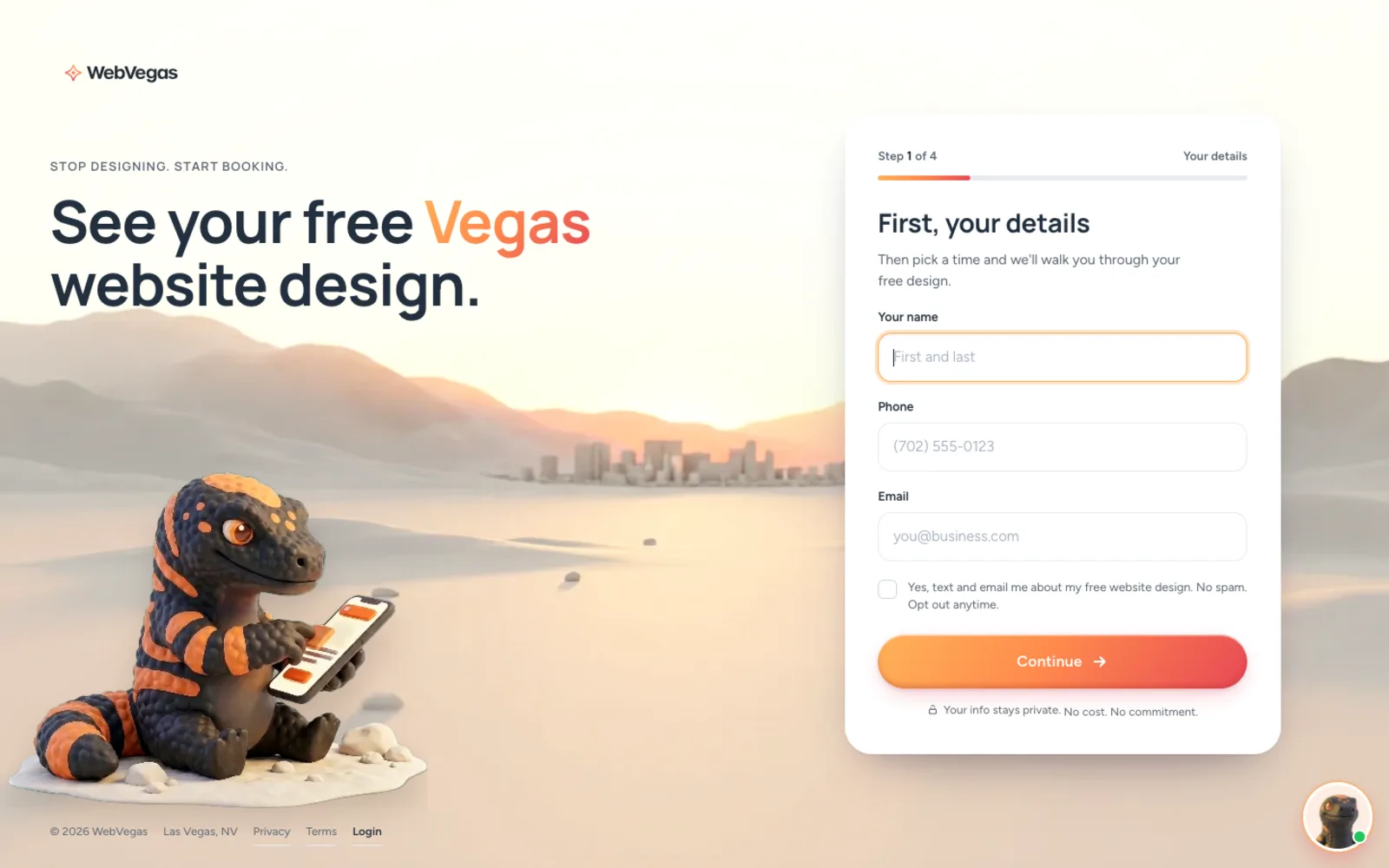
Website build · Las Vegas
WebVegas: a Las Vegas web design brand and its booking funnel
I designed and built webvegas.io, a Las Vegas web design and SEO brand: the site, a four-step booking form that hands each lead a free design walkthrough, and the brand behind it.
See the live sitePortfolio Examples
More of the work
Website build · Henderson
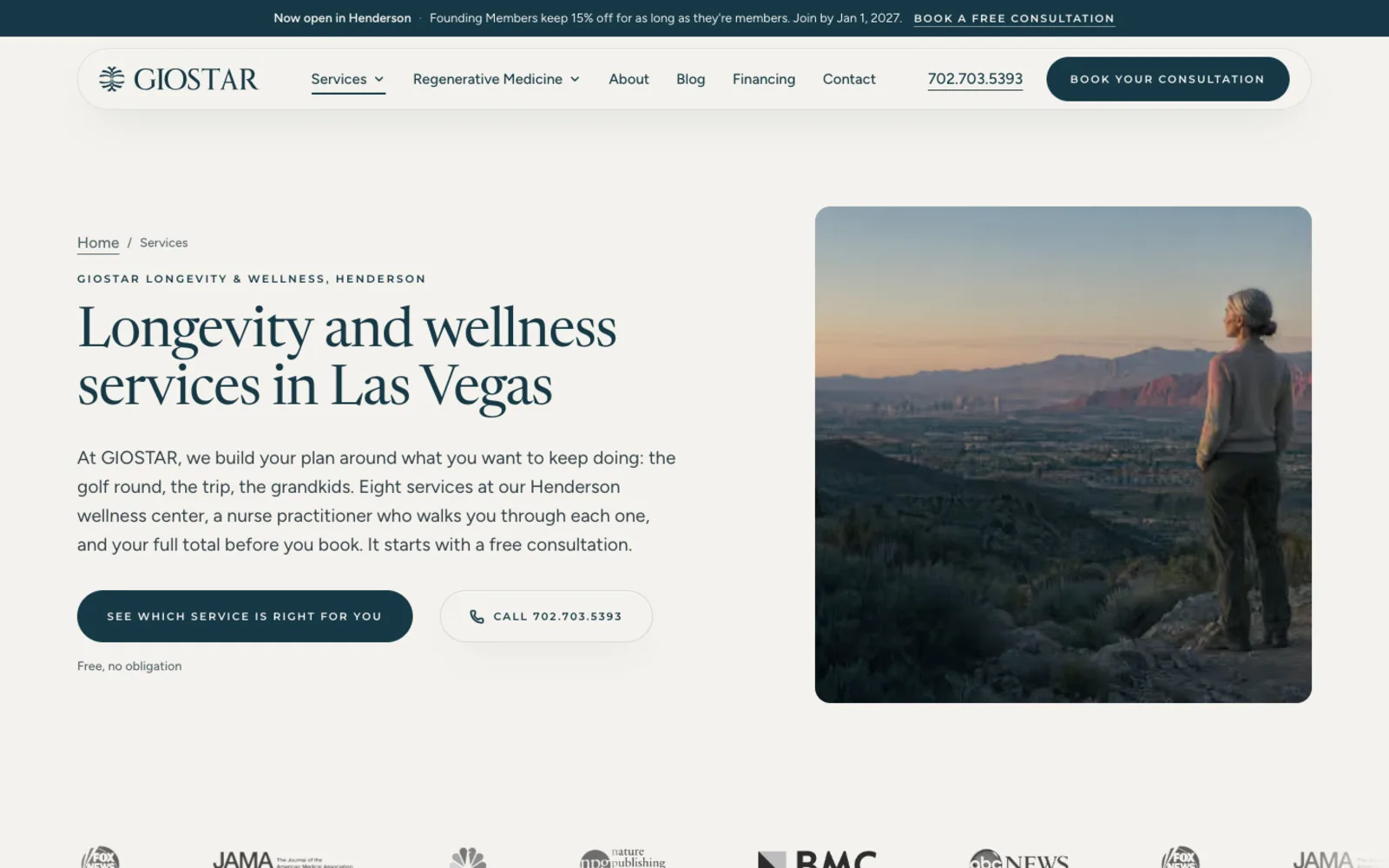
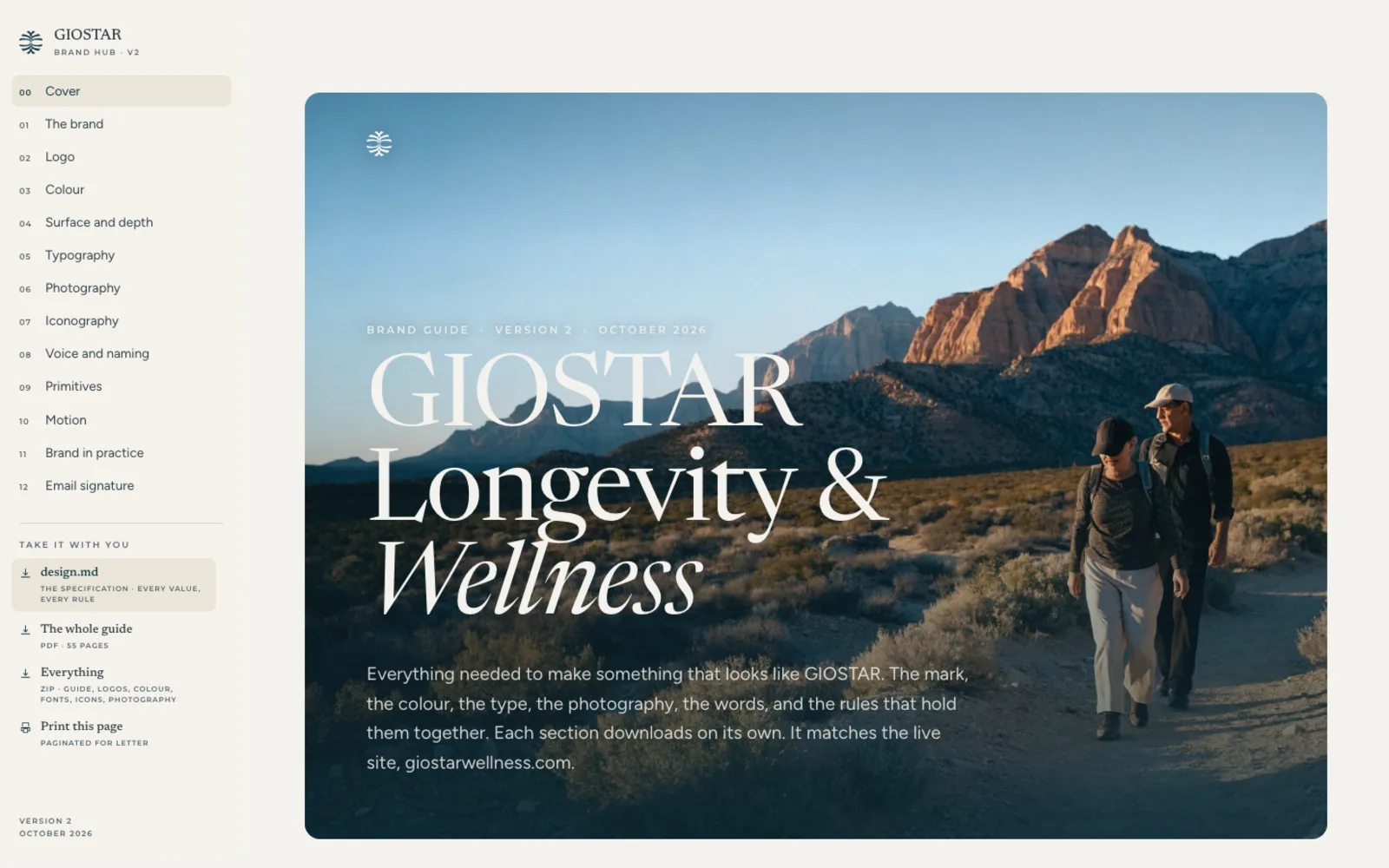
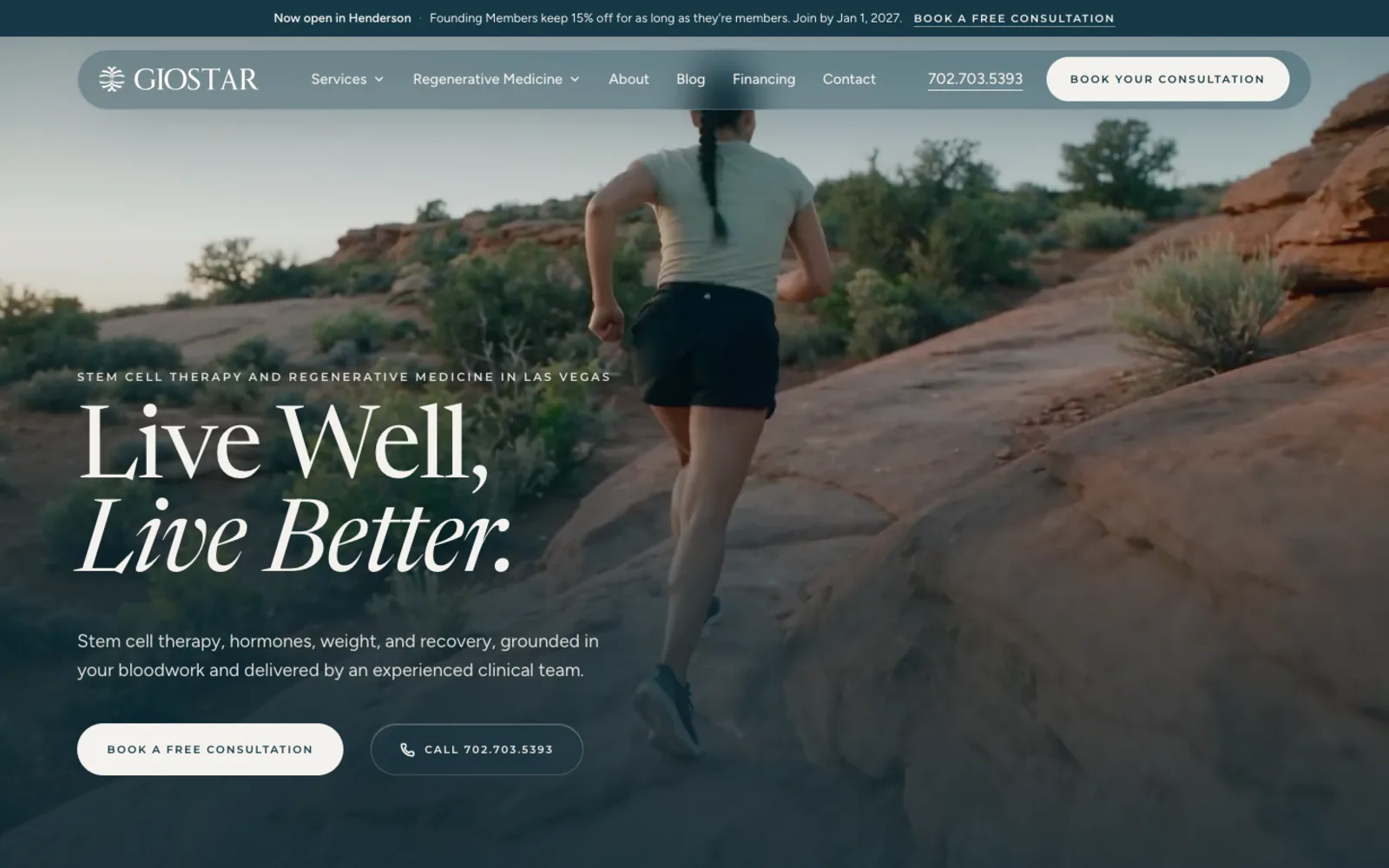
GIOSTAR: the clinic website, booking and lead tracking
See the live site

Brand mark · Event venue
Desert Inn Oasis: the refined mark and the plan for the new site
Site in build

Brand identity · Pharma
Mili Pharma: the butterfly mark and the lockups
Site in build

Social content system
Quotible: a testimonial-led social series
Content system

Want me to look at your site first?
A free audit, and a same-day reply from Justin, personally.
Documentation Included With Custom Software
What the team keeps at handover
Software nobody can explain becomes a risk the day its builder is unavailable. Every build ends with written documentation that a new person can read: the purpose of each screen, the rules it applies, where its data comes from and how to restore it.
The documentation is written in plain language, with a short list of the common tasks and the questions to ask when something looks wrong. Your team keeps a copy, so the tool does not depend on one person's memory. The documentation is updated each time the tool changes, so the copy in your hands always matches the live system.
Every build ships with a plain-language guide for the owner and a technical document for whoever maintains the code next. Both are kept in the project folder and updated with each release, so they match what is running. A short walkthrough video is recorded for each main workflow.
Software Integrations With Existing Tools
Connecting the tools you already use
Most operators already run a few systems that hold part of the record. A custom tool that reads from them, instead of replacing them, keeps the record in one place without a migration project. The scope lists each system, the direction of each connection and the owner on your side.
Each connection is tested against real records, and failures are logged with a reference number. A sync that fails is visible to your team, so a missing record is never a silent problem. A connection that stops working is reported in the same log as every other failure, with the owner named on your side.
Integrations are built as separate connections with their own logs. When an accounting or booking system changes its interface, the fix is contained to one connection and the rest of the software keeps running. Each connection has a named owner and a clear list of the data it reads and writes.
Software Testing Before Release
Tests against the written requirements
Testing starts with the requirement list, not with the screens. Each row gets a test case with a known input and an expected result. A row passes when the tool produces that result, and a failed row stays open until the fix passes too.
Your team runs the acceptance tests on its own devices, with its own data, before the tool goes live. The signed list becomes part of the handover, so the state of the tool on launch day is on paper. Test cases are written from the requirement rows, not from the screens, so a screen that looks right but gives the wrong result still fails.
Testing covers the workflows the business depends on, such as creating an order, sending an invoice and closing a month. Each test is recorded with the result, so a repeated failure is easy to trace. Staff take part in a short acceptance run before launch. Bugs found in that run are ranked by how many people they block.
Choosing a Custom Software Developer
What to ask before you sign
Ask who writes the requirements with you, and whether they are written down before any build begins. Ask who will answer questions after launch, and how a bug is reported and tracked. Ask whether you will receive the code and the documentation at handover.
Ask for examples of finished tools you can open. A specific answer is written into the scope. A vague answer usually means the requirements will be discovered during the build, when changes cost the most. Ask for a reference from a past client you can call, and ask what that client would change about the work.
Ask for a sample of code they wrote for a past client and the test suite that goes with it. Ask how they handle a change request mid-build and who signs off on it. Clear answers to both questions show a team that expects change and plans for it.
Custom Software Questions
Questions operators ask before a build
Software Development Reviews
What clients wrote on Google
- ★★★★★
After going back and forth on whether to bring in outside help, we ended up working with Justin for some AI consulting on how to structure our operations. He laid out a clear plan, didn't overcomplicate it, and we've been running smoother since. Good fit for a service business. He knows Las Vegas and he knows this stuff.
Kristen S. · Google
- ★★★★★
Justin joined our team a few months before opening to replace a marketing agency that wasn’t performing. He stepped up fast. Within weeks he launched a fully redesigned website with new brand guidelines, built and delivered our marketing plan and AI strategy, and helped implement our system architecture so we could open on time. Since then, he’s made several critical enhancements to the site that helped us generate revenue in our first month. His engagement was supposed to end at opening, but he became such an integral part of our leadership team that we kept him on to help evolve our marketing and tech strategy as we grow. He’s easy to work with, pushes back when it matters, and moves easily between strategy, delivery, and operations depending on what’s needed. If you’re looking for a deeply experienced, knowledgeable, and dedicated marketing, AI, or technology consultant, I highly recommend Justin Harris AI Consulting.
Devin R. · Google
- ★★★★★
Justin has been a true Gem to have as part of our company. His professionalism, immediate attention to branding and extensive details in marketing has made so much improvement on our business. We are forever grateful to have such and amazing marketing asset and cannot thank you enough Justin!
Desi W. · Google
- ★★★★
Justin Harris was very helpful in resolving some issues we had with our Webflow website.
Kristy F. · Google
- ★★★★★
I had the pleasure of working alongside Justin and consistently saw firsthand the level of dedication and professionalism he brings to his work. He was always the first one in the office, setting the tone with his strong work ethic and commitment to excellence. What stood out most was how deeply he cared about every client. He approached each project with thoughtfulness, expertise, and a genuine drive to deliver meaningful results. He combines sharp technical knowledge with a practical, solutions-oriented mindset, which makes him especially effective in the AI space. Any organization looking for thoughtful, reliable, and highly skilled AI consulting support would be in great hands working with him!
Jenevine Y. · Google
- ★★★★★
Hired him to manage our AI systems and it's been pretty smooth. He knew what needed to be done and got it handled without a lot of back and forth. Good experience for our service business.
BC G. · Google
- ★★★★★
I follow Justin on social media and read about his work and his contributions to the AI industry. He really knows how to use the technology in creating a system that allows you to make your business work more efficiently and effectively.
Ana J. · Google
- ★★★★★
Justin was the person I would go to for advice about AI automation for my workload. He knew the subject well and didn't overcomplicate it. For anyone in Las Vegas running a service business and wondering if AI systems are worth looking into, talking to him first is a great move!
Yaneliz M. · Google
- ★★★★★
Working with Justin is always a pleasure. He is professional, trustworthy, and consistently delivers outstanding results. As a longtime Las Vegas local, he has an exceptional knowledge of the territory and truly understands the market. I highly recommend his services to anyone who is serious about growing their business!
k C. · Google
- ★★★★★
From what I've seen, Justin knows the AI automation space better than most people I've come across in Las Vegas. He's the kind of person who actually understands the technical side and can explain it without making you feel lost. Good guy, good reputation.
Afaryn F. · Google
- ★★★★★
I've Known Justin for a while now and he really knows his stuff when it comes to AI consulting. If people in Las Vegas were to ask me for recommendations in this space, he's the best guy for the job, hands down.
Mickey S. · Google
- ★★★★★
After going back and forth on whether to bring in outside help, we reached out to Justin for some AI consulting advice on where our service business could actually use automation. He was straightforward about what made sense and what didn't. Ended up being a useful conversation. Las Vegas has no shortage of people claiming to be experts, and he's one of the few who could back it up.
Vincent M. · Google
- ★★★★★
Known Justin for a few years now and the guy actually knows his stuff when it comes to AI automation. Friends in the Las Vegas service business space keep asking me who to call and I always point them his way.
Chris M. · Google
- ★★★★★
Justin is one of those guys who actually knows what he's talking about and doesn't cut any corners. Will definitely be working with him again.
David S. · Google
- ★★★★★
Justin knows what he's doing highly recommend using his service he will treat you right and give you tremendous value !👍
Gregory J. · Google
- ★★★★★
Known Justin for a many years and the guy actually knows what he's talking about when it comes to AI and automation. Not the type to just throw buzzwords around. Based in Las Vegas and well connected in the space. …
cindy D. · Google
- ★★★★★
Known Justin for a few years now. Guy knows the AI space better than most people I've come across, especially here in Las Vegas where there's no shortage of people claiming to be experts. He actually understands how AI automation works at a practical level, not just the theory. The kind of person who gives you a straight answer with kindness and patience
Katelyn H. · Google
- ★★★★★
Knew Justin before he started building AI systems for businesses, and watching what he's put together is genuinely impressive. He built out an AI automation setup for my website in Las Vegas and it changed how we handle leads completely. The guy actually runs this stuff himself, so he knows what works.
Justin E. · Google
Custom Software Maintenance
Support, changes and updates after launch
Software needs a small amount of upkeep after launch. Operating systems update, the systems it connects to change their rules, and the business itself grows. Each upkeep item is written into the scope as its own line, with how often it happens and who signs it off.
When a change is requested, it gets a short written scope, with the price and the effect on the schedule before any work starts. A bug is logged with the steps to reproduce it, the fix that followed and the test that now covers it. Each change request is closed with a note of what it altered, so the history of the tool is easy to follow.
Maintenance covers security updates, library upgrades and small changes that come up after launch. It is scheduled as a fixed monthly block, so the owner knows what is included and what needs a separate scope. Backups are tested each quarter by restoring a copy to a separate environment.
Custom Software Security Basics
Who can see and change each record
A custom tool holds real business records, so access is decided before the first screen is built. Each role sees only the records its job needs, and the admin screens keep a log of who changed what. Passwords are never stored in plain text.
The access list is written into the documentation and reviewed when a role changes or a person leaves. I do not claim a compliance certificate the tool has not been audited for. If your industry sets rules for its records, those rules go into the requirements list and get a named checker. Shared logins are not used for staff work, and each person's actions can be traced back to their own account.
Security starts with role-based access, encrypted connections and a login policy that requires strong passwords and a second factor for admin accounts. Logs record each sign-in and each change to sensitive records. The owner receives a short quarterly review of access rights, so former staff accounts are removed promptly.
Related Builds
Other builds that often sit beside this one
Software Development Las Vegas NV
Every part of the Valley, by ZIP code
Las Vegas
89030 · 89101 · 89102 · 89104 · 89106 · 89107 · 89108 · 89109 · 89110 · 89117 · 89124 · 89128 · 89129 · 89130 · 89131 · 89134 · 89138 · 89143 · 89144 · 89145 · 89146 · 89149 · 89166
Henderson
89002 · 89005 · 89011 · 89012 · 89014 · 89015 · 89044 · 89052 · 89054 · 89074 · 89120 · 89122 · 89123 · 89183
North Las Vegas
89030 · 89031 · 89032 · 89081 · 89084 · 89085 · 89086 · 89101 · 89115 · 89130
Summerlin
89128 · 89134 · 89135 · 89138 · 89144 · 89145 · 89148 · 89161
Spring Valley
89102 · 89103 · 89113 · 89117 · 89118 · 89146 · 89147 · 89148 · 89178
Paradise
89074 · 89102 · 89103 · 89109 · 89118 · 89119 · 89120 · 89121 · 89123 · 89158 · 89169 · 89183
Enterprise
89113 · 89118 · 89119 · 89123 · 89139 · 89141 · 89148 · 89178 · 89179 · 89183
Sunrise Manor
89104 · 89110 · 89115 · 89121 · 89122 · 89142 · 89156
Boulder City
89005 · 89044
Software Team and Timing
How the work is staffed and scheduled
Software for Operators
Operators need software that matches the way their crews, front desks and managers already work. The tools below are the kinds I scope most often, and each one starts from the people who will open it every day rather than from a list of features.
Operators need software that matches how the shift actually runs. I start with a walk-through of a normal day, marking each place where a paper form, a phone call or a spreadsheet fills a gap, and build the first screens around those points. The result is software people use because it removes a step, not because a manager asked for it.
Tools for the teams that run the work
- Step 01
Field crews
Job sheets, photos and sign-offs completed on a phone, with the record saved in one place. A job can close offline and sync later.
- Step 02
Front desk and intake
A single intake screen that collects the details once and passes them to scheduling, billing and the people who need them. Duplicate names are flagged before a second record is created.
- Step 03
Managers and owners
A view of open work, overdue items and money owed, built from the same records the team already keeps. Every number on the view links back to the records it came from.
- Step 04
Back office
Approvals, purchase requests and month-end checks, with each step recorded and each approver named. Each approver sees only the requests that route to their role.
Software Reports and Dashboards
Numbers with their sources attached
A report is only useful when its numbers can be traced. Every figure on a custom dashboard names the system it came from, the date it was pulled and the rule that turned the raw record into the number. Your team can check any figure against the source in a few clicks.
I build reports from the requirements list, so each one answers a question someone asked. A report that nobody opens is removed at review, rather than kept because it was expensive to build. When a figure changes, the report shows the reason next to the change, so a sudden shift is explained before anyone asks.
Reports answer the questions the owner asks each week, in the order they are asked. Each number has a written definition and a source, so two people reading the same dashboard reach the same answer. Exports go to the spreadsheet format the accountant already uses.
User Roles in Custom Software
Who sees each screen
Roles decide what each person can see and change. A dispatcher, a technician and an owner may all open the same tool, and each should see a different set of screens and buttons. Roles are written into the requirements before the first screen is designed, with a name beside each one.
Role changes are logged. When someone starts, moves to a new job or leaves, the access list is updated the same day, and the change is recorded with the date and the person who approved it. Owners review the role list each quarter, and the review is logged like any other change.
Each role gets only the screens and actions its job needs. Roles are reviewed when someone changes jobs, and every permission change is recorded with the name of the person who approved it. Read-only views are used for managers who need numbers but should not edit records.
Moving Data From Spreadsheets
Getting the old records into the tool
Many custom tools start life as a spreadsheet that the team has outgrown. Moving those records is a separate step with its own checks. Each column is mapped to a field, duplicates are listed for a decision and a sample of records is checked by hand before the full move.
The old spreadsheet stays in place until your team confirms the new record matches it. Anything that does not map cleanly is listed, so the decision about it is made on purpose rather than lost during the move. A sample of the records is checked by hand, and the result is written into the handover file.
Spreadsheets hold years of records in inconsistent shapes. The move starts with a cleaning pass that finds duplicates, blank fields and mixed date formats, then a test import on a copy of the data. The import log lists every row that was changed or skipped, so nothing disappears quietly.
What Happens on Launch Day
The first day with the tool live
Launch day is planned in the scope, with a named person on each side and a short list of checks. The acceptance tests are run once more on the live system, and the people who use the tool each open it while I watch the logs for errors.
Any problem found on launch day goes into the log with its fix and its test. The first week is watched closely, and the report at the end of it lists what changed and what your team should check next. The watch list for the first week is written before launch day, so nothing on it is decided in a hurry.
Launch day runs from a checklist that names each step, its owner and the time it finishes. The old system stays available until the new one has run a full cycle with the team. A named person is on call for the first two weeks, and every issue is logged with its fix.
Software Questions for Operators
Questions about data, reports and roles
Proof, not promises
Case studies I can show you
The Spec-Site Factory: a finished website built before the first sales call
A Las Vegas web design system that builds your finished website from your own public data before the first call, then renders it on demand in under a second. See it, then make it live.
Read the case studyThe Full Website Audit That Crawls Your Whole Site and Scores It 0 to 100
A full website audit in Las Vegas: I crawl your whole site, delegate to specialist agents across technical, on-page, speed, schema, local, and AI search, and return one 0-to-100 health score with a ranked fix list.
Read the case studyMonty and the WebVegas Identity: a full logo family plus a clay Gila-monster mascot with a pose library and motion system
How I built a full logo family and Monty, a clay desert Gila-monster mascot with a pose library and motion system, so a local-service brand is remembered, not forgotten.
Read the case studyRelated services
The rest of the range
Talk About Your Software
Start with the list of tasks
Tell me the three tasks your team repeats most and the systems they touch, and I will reply with a written requirements list and a scope.