Podcast Production
A show that ships every week
I do podcast production for experts, owners and small companies in Las Vegas. Recording, editing, show notes and distribution run on one calendar, so a show does not stall after episode five.
★★★★★ 5-star rated on Google · 14 years · 300+ Las Vegas businesses
Trusted By















Why most podcasts stop after the fifth episode
Shows stall when production stops
Most podcasts do not fail on the first episode. They fail between episode five and episode nine, when the first burst of energy is gone and the next recording still has to be booked, edited, described and posted. A show with no plan for that stretch goes quiet, and a quiet feed is the signal a listener reads as the end.
The stall is almost never about the microphone or the idea. It is the gap between recording day and release day, where the files sit, the guest email goes unanswered and the host decides the next week is a good time to catch up. Every week of that gap makes the next episode harder to restart.
What a stalled podcast costs an expert
Silence costs more than the launch
For an expert or an owner, a podcast is a way to be heard by the people who will call. A show that runs for five episodes and disappears tells those people the opposite of what was intended. The launch cost is spent, the guests who said yes have moved on and the show becomes a line on a list of things that were tried.
A show that releases on a steady day, with the same length and the same look, does a different job. Listeners learn when the next episode comes, and the host's name starts to show up in search and in the feed without any extra spend. Consistency is what makes a podcast a channel instead of a project.
How podcast production runs as one calendar
Recording, editing and release on one plan
I plan a show as one calendar. Each episode has a recording date, an editing window, a release day and a set of clips, and each date is written into the plan before the first episode is recorded. The host sees the whole calendar at once, so a missed date is visible while there is still time to move it.
The calendar also sets the guest pipeline. Guests are booked in batches, invited with a clear recording window and reminded the day before. When a guest cancels, the next guest on the list moves into the slot, so the release day does not depend on one person's schedule.

Content and Brand Work I Built
Work I built, live where you can check it
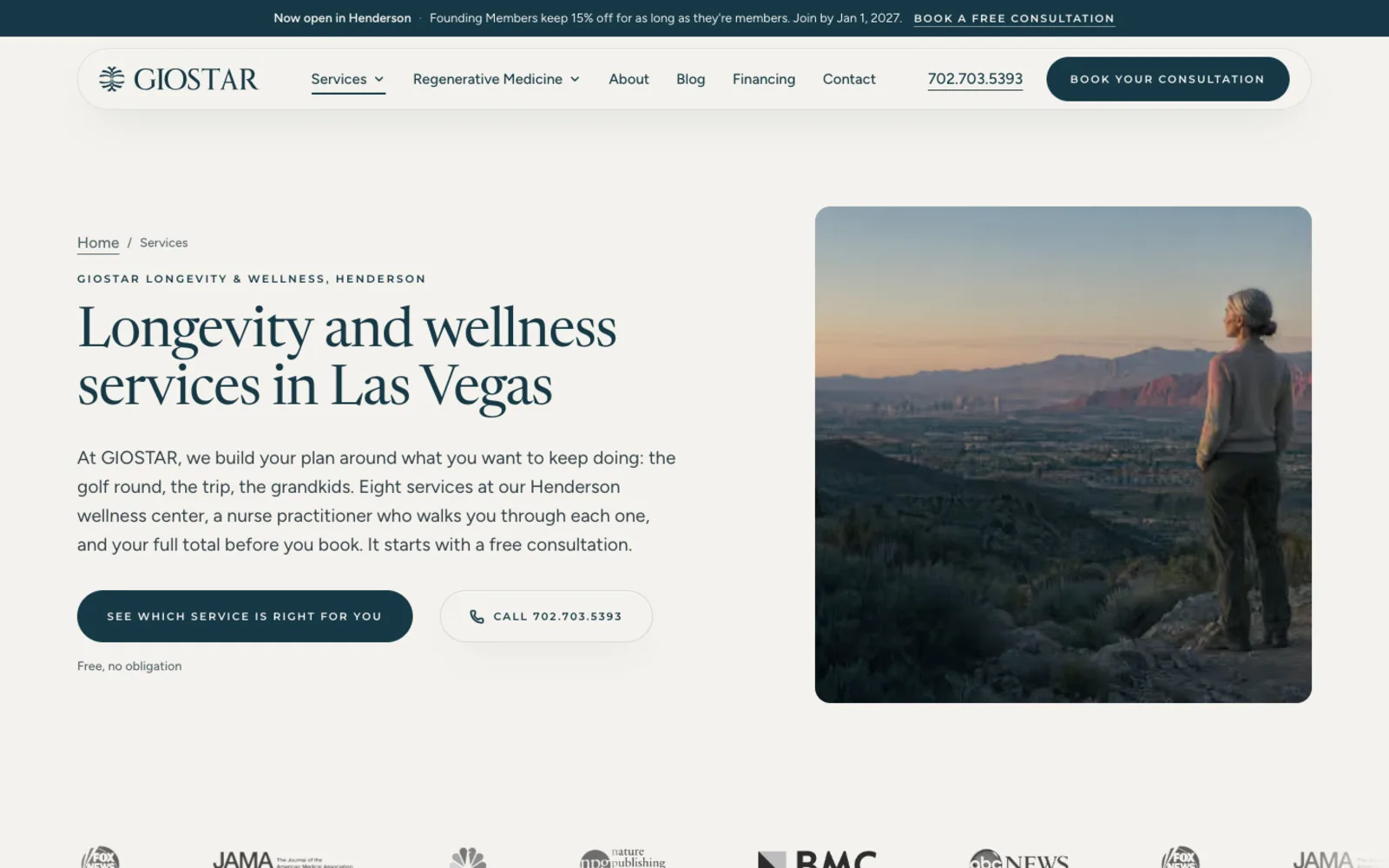
Website build · Henderson
GIOSTAR: the clinic website, booking and lead tracking
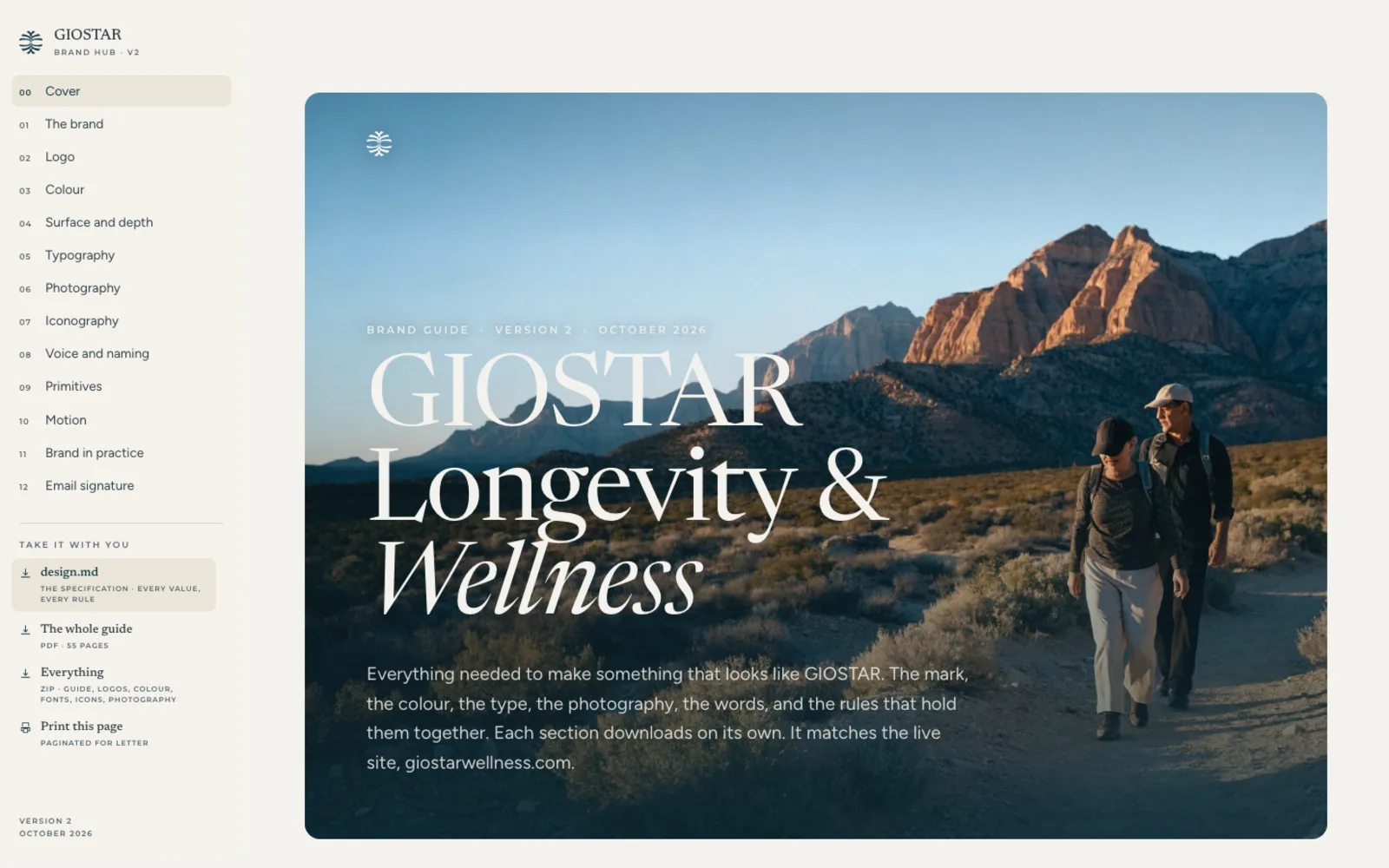
I built and run giostarwellness.com for a regenerative medicine and wellness clinic in Henderson: every service page, online booking, financing and a blog. A website lead is tracked end to end, from the form to a booked consult to an active patient, with no manual steps. I also built its live brand hub, so every page, post and print piece pulls the same colours, type and rules.
See the live sitePortfolio Examples
More of the work
Website build · Las Vegas
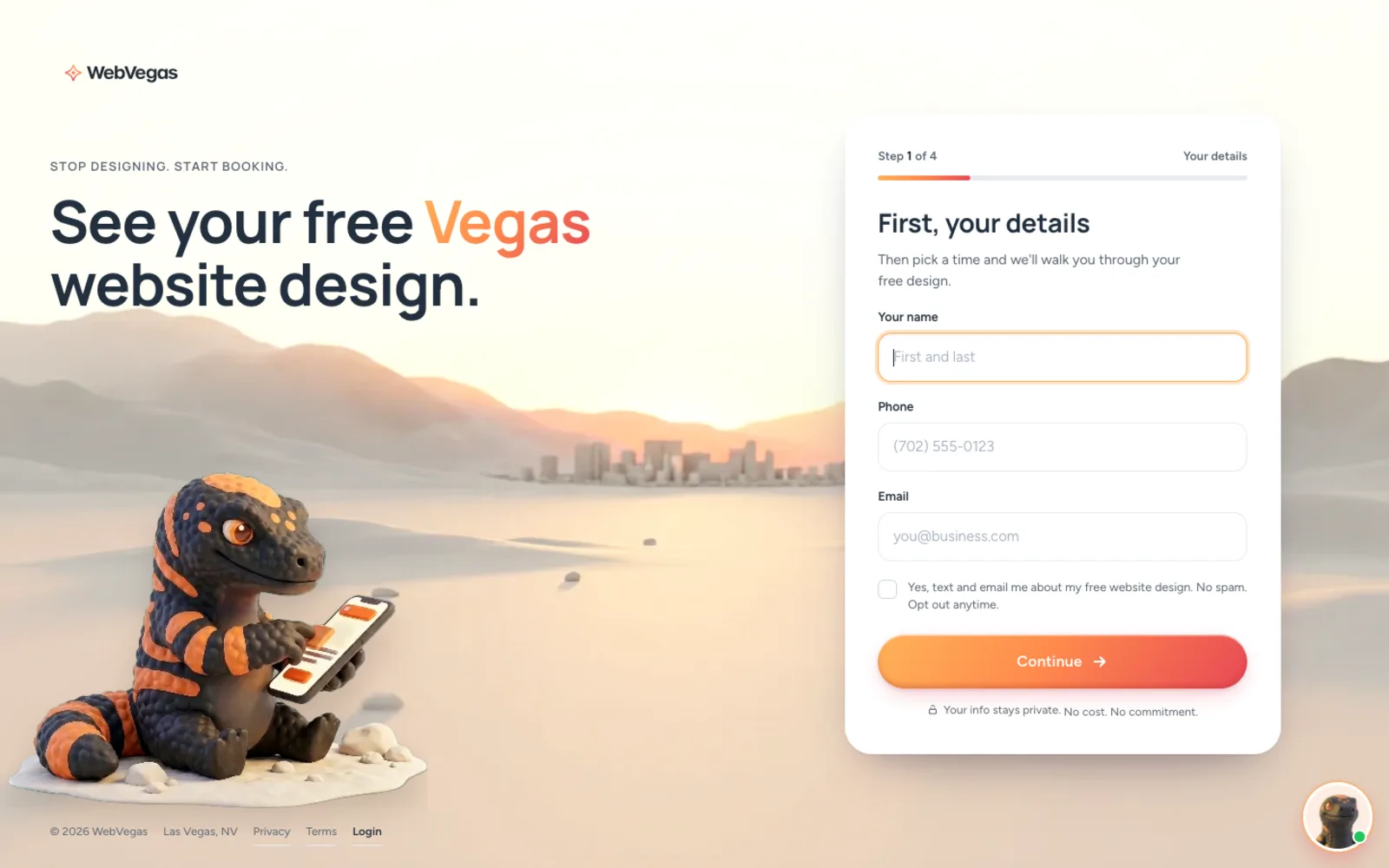
WebVegas: a Las Vegas web design brand and its booking funnel
See the live site

Brand mark · Event venue
Desert Inn Oasis: the refined mark and the plan for the new site
Site in build

Brand identity · Pharma
Mili Pharma: the butterfly mark and the lockups
Site in build
Social content system
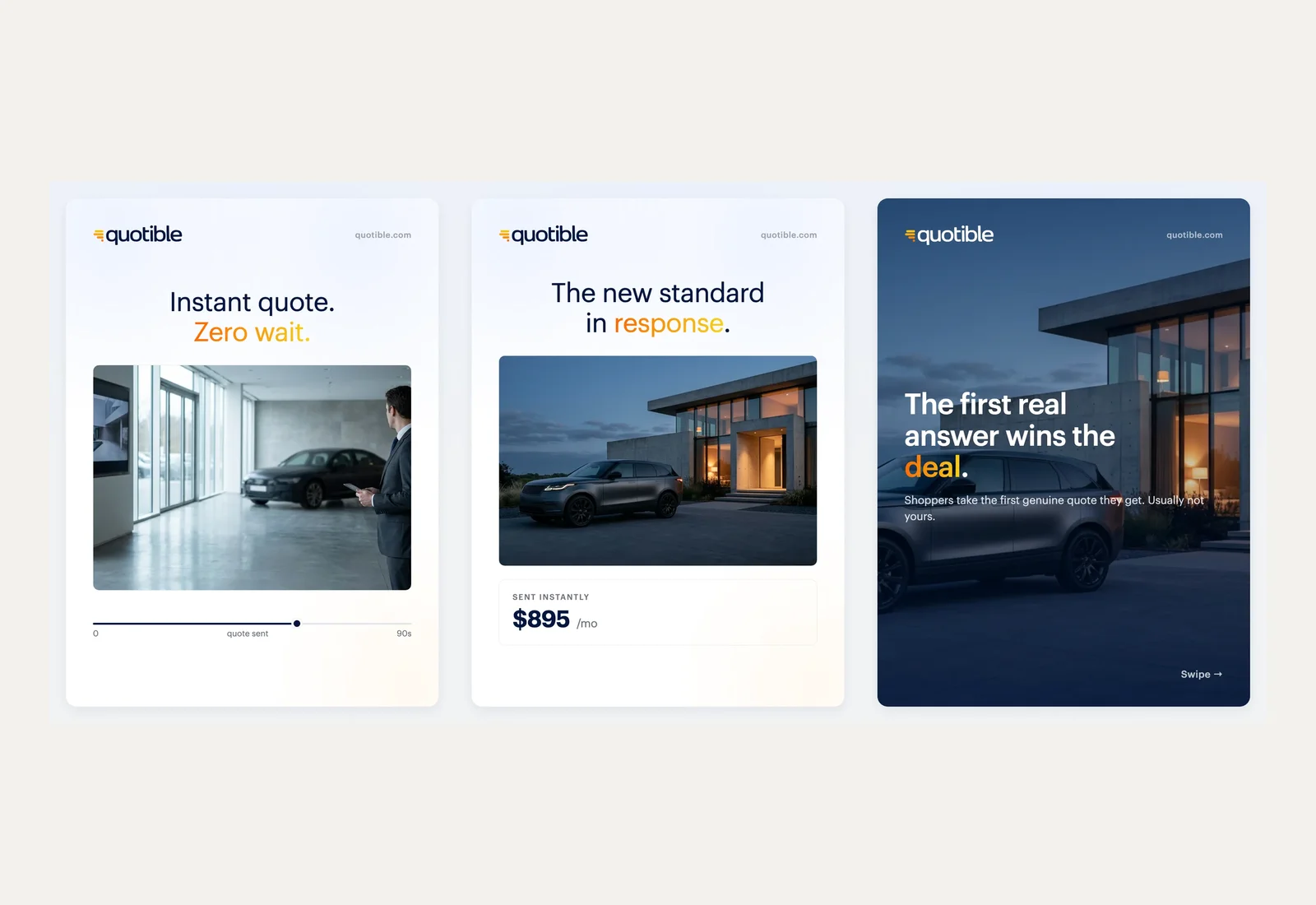
Quotible: a testimonial-led social series
Content system
Want me to look at your site first?
A free audit, and a same-day reply from Justin, personally.
Podcast production services I run
Six parts of a podcast every week
Each part is written into the scope before the first episode is recorded. Each card links to the page for the service that sits beside it.
Recording and session setup
A quiet room or studio space, one microphone per speaker and a level check before every session.
Read more →Editing and audio cleanup
Trimmed, leveled and cleaned audio with the intro, outro and any ad breaks placed where the plan says.
Read more →Show notes and transcripts
An episode description, time-stamped notes and a full transcript for search and for listeners who read.
Read more →Clips for social
Two to four short clips per episode, captioned and sized for the platforms the host already uses.
Read more →Distribution to directories
The show set up on the main podcast directories and video platforms, with one feed the host controls.
Read more →Show website page
A page for the show with each episode, its notes and a way for listeners to subscribe or get in touch.
Read more →How to start a podcast with no audience
Start with the listeners you already have
A new show does not need a large audience on day one. It needs a clear listener and a reason for that person to press play. The best starting point is the list the host already has: past customers, referral partners, former students or the people who asked a good question at a talk. Those listeners give a show its first honest feedback.
I suggest a first season of six to eight episodes, released on one day each week and promoted to the existing list before any paid effort. Six episodes is enough to learn what the listener cares about, and it gives the host a finished set of work to point people toward when they arrive.
How to start a podcast on Spotify
Hosting, directories and the first upload
Spotify listings come from a hosted feed. The show is hosted once, the feed is submitted to the directories and the cover art, description and category are set before the first episode goes live. A mistake in the feed is easy to fix early and harder to fix after the show has listeners.
I set up the hosting, the feed and the directory submissions as part of the production scope, so the host does not need to learn the platform's settings. The host approves the cover, the description and the first episode, and the rest is checked against the plan before release.

Podcast Production Reviews
What clients wrote on Google
- ★★★★★
After going back and forth on whether to bring in outside help, we ended up working with Justin for some AI consulting on how to structure our operations. He laid out a clear plan, didn't overcomplicate it, and we've been running smoother since. Good fit for a service business. He knows Las Vegas and he knows this stuff.
Kristen S. · Google
- ★★★★★
Justin joined our team a few months before opening to replace a marketing agency that wasn’t performing. He stepped up fast. Within weeks he launched a fully redesigned website with new brand guidelines, built and delivered our marketing plan and AI strategy, and helped implement our system architecture so we could open on time. Since then, he’s made several critical enhancements to the site that helped us generate revenue in our first month. His engagement was supposed to end at opening, but he became such an integral part of our leadership team that we kept him on to help evolve our marketing and tech strategy as we grow. He’s easy to work with, pushes back when it matters, and moves easily between strategy, delivery, and operations depending on what’s needed. If you’re looking for a deeply experienced, knowledgeable, and dedicated marketing, AI, or technology consultant, I highly recommend Justin Harris AI Consulting.
Devin R. · Google
- ★★★★★
Justin has been a true Gem to have as part of our company. His professionalism, immediate attention to branding and extensive details in marketing has made so much improvement on our business. We are forever grateful to have such and amazing marketing asset and cannot thank you enough Justin!
Desi W. · Google
- ★★★★
Justin Harris was very helpful in resolving some issues we had with our Webflow website.
Kristy F. · Google
- ★★★★★
I had the pleasure of working alongside Justin and consistently saw firsthand the level of dedication and professionalism he brings to his work. He was always the first one in the office, setting the tone with his strong work ethic and commitment to excellence. What stood out most was how deeply he cared about every client. He approached each project with thoughtfulness, expertise, and a genuine drive to deliver meaningful results. He combines sharp technical knowledge with a practical, solutions-oriented mindset, which makes him especially effective in the AI space. Any organization looking for thoughtful, reliable, and highly skilled AI consulting support would be in great hands working with him!
Jenevine Y. · Google
- ★★★★★
Hired him to manage our AI systems and it's been pretty smooth. He knew what needed to be done and got it handled without a lot of back and forth. Good experience for our service business.
BC G. · Google
- ★★★★★
I follow Justin on social media and read about his work and his contributions to the AI industry. He really knows how to use the technology in creating a system that allows you to make your business work more efficiently and effectively.
Ana J. · Google
- ★★★★★
Justin was the person I would go to for advice about AI automation for my workload. He knew the subject well and didn't overcomplicate it. For anyone in Las Vegas running a service business and wondering if AI systems are worth looking into, talking to him first is a great move!
Yaneliz M. · Google
- ★★★★★
Working with Justin is always a pleasure. He is professional, trustworthy, and consistently delivers outstanding results. As a longtime Las Vegas local, he has an exceptional knowledge of the territory and truly understands the market. I highly recommend his services to anyone who is serious about growing their business!
k C. · Google
- ★★★★★
From what I've seen, Justin knows the AI automation space better than most people I've come across in Las Vegas. He's the kind of person who actually understands the technical side and can explain it without making you feel lost. Good guy, good reputation.
Afaryn F. · Google
- ★★★★★
I've Known Justin for a while now and he really knows his stuff when it comes to AI consulting. If people in Las Vegas were to ask me for recommendations in this space, he's the best guy for the job, hands down.
Mickey S. · Google
- ★★★★★
After going back and forth on whether to bring in outside help, we reached out to Justin for some AI consulting advice on where our service business could actually use automation. He was straightforward about what made sense and what didn't. Ended up being a useful conversation. Las Vegas has no shortage of people claiming to be experts, and he's one of the few who could back it up.
Vincent M. · Google
- ★★★★★
Known Justin for a few years now and the guy actually knows his stuff when it comes to AI automation. Friends in the Las Vegas service business space keep asking me who to call and I always point them his way.
Chris M. · Google
- ★★★★★
Justin is one of those guys who actually knows what he's talking about and doesn't cut any corners. Will definitely be working with him again.
David S. · Google
- ★★★★★
Justin knows what he's doing highly recommend using his service he will treat you right and give you tremendous value !👍
Gregory J. · Google
- ★★★★★
Known Justin for a many years and the guy actually knows what he's talking about when it comes to AI and automation. Not the type to just throw buzzwords around. Based in Las Vegas and well connected in the space. …
cindy D. · Google
- ★★★★★
Known Justin for a few years now. Guy knows the AI space better than most people I've come across, especially here in Las Vegas where there's no shortage of people claiming to be experts. He actually understands how AI automation works at a practical level, not just the theory. The kind of person who gives you a straight answer with kindness and patience
Katelyn H. · Google
- ★★★★★
Knew Justin before he started building AI systems for businesses, and watching what he's put together is genuinely impressive. He built out an AI automation setup for my website in Las Vegas and it changed how we handle leads completely. The guy actually runs this stuff himself, so he knows what works.
Justin E. · Google
How to start a podcast on YouTube for free
Video first, audio on the same feed
Many shows now record video as well as audio, because a listener who finds the show on a video platform often stays for the conversation. Recording with a camera on each speaker adds setup time and a second check on lighting and framing, so it is a decision for the host to make on purpose rather than by default.
Uploading to a video platform costs nothing beyond the time to make the video. What costs money is the production behind it. I plan the video version alongside the audio so the release day, the description and the clips all point to the same episode.
How to make a good podcast
Four things that hold a listener
A good podcast is not a perfect one. Listeners stay when the sound is clear, the host knows the guest's work, the episode has a point and the length matches the promise in the title. Those four things are checked on every episode before it is released.
Listeners decide in the first minute, so I check the opening of each episode against that standard before release, and I mark any episode whose first minute needs a recut. The note goes to the host along with the edit, not after it.
- Clear sound from the first second to the last
- A host who has read the guest's work and asks a real question
- One point per episode, stated early and returned to at the end
- A running time that matches what the title promises
Who podcast production in Las Vegas is for
Experts, owners and small teams
Attorneys, physicians, financial planners, consultants and business owners who want clients to hear their thinking before a first call. A show gives a buyer a long, specific sample of how the host works, which a brochure cannot do.
Small companies that want a customer-facing show with a steady release day, and nonprofits with a volunteer host who needs production to be handled. I am not the right fit for a daily news show or a network launch with a crew of ten. For those, a larger studio will serve you better, and I will say so on the first call.
How much does podcast production cost
Episodes and clips set the price
I quote a fixed monthly price for a written scope after a look at the show's format, the number of episodes and the clips you need. A weekly interview show with one guest is a different job from a monthly panel with four speakers and video, so one flat rate would be wrong for at least one of them. These are the things that move the number.
- Episodes per month and the length of each one
- Number of speakers and whether the recording is remote
- Video recording in addition to audio
- Clips, show notes and transcripts per episode
- Guest booking handled by me or by the host
How long does podcast production take
A release calendar, not a guess
Each episode needs about a week from recording to release in a steady show: a day or two for editing, a day for notes and clips and a fixed release day. The first episode takes longer, because the intro, the cover, the feed and the directories all have to be set up before anything goes live.
The calendar is written into the scope with the release day for every episode in the season. If a guest moves a recording, the release date moves on the same page with the reason beside it, so the host is never surprised by a late episode.
A season planned this way also shows the host how much time the show takes each month, which makes the decision to keep going a choice rather than a guilty habit. The same view helps when a guest list runs thin, because the gap shows up on the calendar weeks before it shows up in the feed.
Podcast production process step by step
Five steps from plan to release
- Step 01
Plan the season
The format, the length, the guest list and the release day for each episode, written into one calendar.
- Step 02
Record the episode
A booked session with a level check, a quiet room and a backup recording running in the background.
- Step 03
Edit and write the notes
Audio cleaned and trimmed, then show notes and a transcript written from the final cut.
- Step 04
Cut the clips
Two to four short clips per episode, captioned and sized for the platforms the host uses.
- Step 05
Release on the day
The episode, the notes and the clips go out together on the release day, and the host gets a short report.
Podcast editing and audio cleanup
Edits that remove the dead air, not the voice
Editing a conversation is a matter of judgment. The goal is to remove the breath, the false start and the long pause that makes a listener reach for the skip button, while leaving the laugh, the hesitation and the moment a guest changes their mind. An edit that is too tight sounds like a machine wrote the episode, and one that is too loose loses the pace.
Audio is cleaned for hum, clicks and uneven levels, and every speaker is brought to a similar volume so the listener does not reach for the volume control between voices. The intro, the outro and any ad break are placed where the plan says, and the final file is checked on a phone speaker and in a car before it is released.
Show notes and transcripts that help people find an episode
Notes that help search find the episode
A written description is how most people find an episode after it is released. A good description states the guest, the question the episode answers and the one idea a listener will take away, in plain words that a person would type into a search box. Time stamps let a listener jump to the part they came for.
The full transcript is written from the final cut, checked against the audio for names and terms, and posted with the episode. It serves listeners who read rather than listen, and it gives search a full text of the conversation to work with.
That is one reason I treat transcripts as part of the release, not an extra. Clips and notes come from the same final cut, so a number quoted in a clip matches the number in the notes and the transcript.
Recording setup for a podcast
Sound that holds up on earbuds
Most listeners hear a show on earbuds in a car or on a walk, so the recording has to survive a small speaker and a noisy street. The room matters more than the equipment. A quiet space with soft surfaces, a microphone close to each speaker and a level check before the session will beat an expensive setup in a bad room.
For remote guests, I ask them to record in a quiet room with headphones and send a short test clip. A local backup recording runs on each side, so a dropped connection costs a few seconds rather than the interview. The host sees the setup notes before the first session.
Podcast Production Areas Las Vegas
Every part of the Valley, by ZIP code
Las Vegas
89030 · 89101 · 89102 · 89104 · 89106 · 89107 · 89108 · 89109 · 89110 · 89117 · 89124 · 89128 · 89129 · 89130 · 89131 · 89134 · 89138 · 89143 · 89144 · 89145 · 89146 · 89149 · 89166
Henderson
89002 · 89005 · 89011 · 89012 · 89014 · 89015 · 89044 · 89052 · 89054 · 89074 · 89120 · 89122 · 89123 · 89183
North Las Vegas
89030 · 89031 · 89032 · 89081 · 89084 · 89085 · 89086 · 89101 · 89115 · 89130
Summerlin
89128 · 89134 · 89135 · 89138 · 89144 · 89145 · 89148 · 89161
Spring Valley
89102 · 89103 · 89113 · 89117 · 89118 · 89146 · 89147 · 89148 · 89178
Paradise
89074 · 89102 · 89103 · 89109 · 89118 · 89119 · 89120 · 89121 · 89123 · 89158 · 89169 · 89183
Enterprise
89113 · 89118 · 89119 · 89123 · 89139 · 89141 · 89148 · 89178 · 89179 · 89183
Sunrise Manor
89104 · 89110 · 89115 · 89121 · 89122 · 89142 · 89156
Boulder City
89005 · 89044
Episode calendar and release schedule
One release day, every week
A fixed release day is the single most useful habit a show can build. Listeners learn to expect the episode on the same day each week, and the platforms reward that rhythm with a steady place in the feed. I write the release day into the scope and hold the calendar to it.
A season can have breaks written in too. A summer pause, a holiday gap or a planned double episode are all easier to manage when they are on the calendar from the start, because the listener is told in advance and the host is not caught out.
Guest releases and music rights
Releases and music cleared before release
Every guest signs a release before the recording, covering the use of their voice and image on the episode, the clips and the show website. Music in the intro and outro comes from a source the host has the right to use, and any clip with third-party music is flagged before it is posted.
These are production steps, not legal advice. Any contract with a guest, a sponsor or a music license should go past your own attorney before it is signed, and I will show you where each one sits in the release plan.
Who owns the episodes and the feed
The show stays with the host
The host owns the show, the feed, the episode files and the transcripts. The feed is set up in the host's name on a hosting account the host controls, so a change of producer does not mean a change of show. The full set of audio, notes and clips is handed over in one folder at the end of each season.
I keep working copies only for the period the scope names, then delete them and confirm that in writing. If the host ends the arrangement, the files and the calendar go with the show, and the handover note lists every account the host needs to keep it running.
Podcast production questions
Questions hosts ask before they book
Content work that runs with a podcast
Where podcast work sits in my services
Proof, not promises
Case studies I can show you
The AI Marketing System I Run My Own Business On
A done-for-you AI marketing system in Las Vegas: a multi-agent workforce that runs your web, ads, follow-up, content, and reporting. You approve, it executes.
Read the case studyNurseForward: A Full Agency's Output on One Approval Chain
A full paid-acquisition funnel on one approval chain: landing page, ad strategy, creative, and graphics. NurseForward's top ad hit a 7.56% CTR at $0.31 CPC.
Read the case studyThe Content Waterfall: A 13-Step Approval Chain Where High-Confidence Content Auto-Publishes
An AI content system that runs a 13-step approval chain: high-confidence pieces auto-publish, the rest route to one human gate. The same engine I run on my own brand.
Read the case studyVideo and Content Services
The rest of what I make
Podcast production for my show
A free look at the first season
Send me the show's format, the first six guest names or topics and the day you want to release. I will reply with the calendar I would set for the first season and what the setup needs, whether or not you hire me.