Competitive Analysis Las Vegas
A Competitor Report With Decisions
Competitive analysis Las Vegas work maps the firms that win the searches and leads your business is chasing, then turns each gap into a decision with an owner and a date. You get the findings in writing and the reasons behind them.
★★★★★ 5-star rated on Google · 14 years · 300+ Las Vegas businesses
Trusted By
















Competitive Analysis Services
A competitive analysis answers one question: which firms are taking the searches, leads and reviews that your business wants, and what are they doing that you are not. The answer has to be specific enough to act on the same week.
I cover the search results, the competitor websites, their content, their offers, their reviews and the paid ads they run. Each area gets a short finding and a recommendation, and the recommendations are ranked so you know where to start.
The first part of the work goes to the competitor set and the search terms. The second goes to the page and offer review. The last part is writing the report and reviewing it with you before it is final, so the decisions are yours and the evidence is shown.

What a competitor review covers
Search results review
The firms that appear for your core searches, by service and by area, with the pages they rely on.
Read more →Competitor website review
How each competitor's pages are built, what they promise and where a visitor is asked to act.
Read more →Content and keyword gaps
Topics and searches that competitors answer well and your site does not.
Read more →Reviews and reputation
How many reviews each competitor has, how recent they are and how the owner replies.
Read more →Paid ad presence
Which competitors buy ads for your terms, what the ads say and where they send the click.
Read more →Findings to actions
A ranked list of changes, each with the evidence, the owner and the date it should be done.
Read more →Who Needs Competitive Analysis
Principals who want a plan, not a survey
The people who buy this are usually principals of professional practices and service companies. They know their competitors by name, they have heard that a few of them are doing better, and they do not know why. They want a short answer they can take into a planning meeting.
A common trigger is a new office, a new service line or a drop in inquiries that nobody can explain. Another is a firm that is growing and wants to know which competitor to beat on which search before spending more on marketing.
Owners who are about to spend on ads or a new site usually ask this question first. A competitor review before that spend tells them which rivals already own the searches and offers they want, so the budget does not repeat a crowded play.
The Fear of a Deck Full of Screenshots
Research that ends in a slide deck
The usual fear is paying for a long document full of screenshots that nobody reads. That fear is fair. Many competitive reports list every competitor, every page and every feature, then stop without saying what to change.
The fix is to decide, before the research starts, what each finding is for. Each section of the report answers a named decision, such as which service page to rebuild first or which review request to start this month. Anything that does not answer a decision is cut before the report is sent.
A long slide deck is easy to file away and hard to act on. Each finding in my report names one action, one owner and one date, so the review leads to a decision in the next meeting instead of a folder.

What a Competitor Report Contains
The sections of the written report
The written report is short, ordered and built to be read by the person who makes the decision. It opens with the three changes I would make first, then shows the evidence behind each one, then lists the work in the order it should be done.
The report covers search rivals, paid ads, offers, content gaps and review patterns, in that order. Each section ends with the three changes that would close the gap fastest, ranked by cost and expected effect.
- A one-page summary with the three priority changes
- The competitor set, with the reason each firm was included
- Search and page findings, with a link to each page reviewed
- Review and reputation comparison, shown in plain terms
- A findings-to-actions table with owners and dates
- A list of what was not checked, and why
How a Competitive Analysis Is Run
How the research moves from list to decision
- Step 01
Step one: the competitor set
You and I agree on the firms that compete for your buyers. I build the list from search results, not from the firm's own guess, and note who was left out and why.
- Step 02
Step two: the page review
Each competitor's key pages are reviewed for structure, offer, proof and the next step a visitor is asked to take.
- Step 03
Step three: the search review
The terms that bring each competitor traffic are listed, grouped by service and checked against the terms your site already ranks for.
- Step 04
Step four: the decision list
Every finding is turned into a decision with the evidence, the owner and the date. Findings with no decision attached are dropped from the report.
Competitor Keyword Gaps
Terms the firms you compete with already own
A keyword gap is a search that a competitor answers and your site does not. Some gaps are worth closing, because the buyer is close to a decision. Others are research terms with no commercial buyer behind them, and the report says so instead of listing them as opportunities.
Keyword gaps are the searches a rival ranks for and the business does not. I sort them by buyer intent and by how much they cost to win, so the first pages built target the ones most likely to call.
| Gap type | What it looks like | What the report recommends |
|---|---|---|
| Service gap | A competitor has a page for a service you offer but do not feature | Build or rebuild the service page with the proof the firm has |
| Question gap | Buyers ask a question a competitor answers in a guide | Write a guide that answers it and links to the next step |
| Area gap | A competitor has a page for a part of the Valley you serve | Add an area page only where the firm can show local work |
| Trust gap | A competitor shows credentials or reviews on the page that you do not | Move proof onto the page and keep it current |
Competitor Content and Page Structure
How competitors organize their pages
Competitor pages are read for structure as much as for copy. A page that opens with the service, shows proof within a screen and asks for one clear action is easier to judge against your own. The report notes which pattern each competitor uses and where your pages fall short of it.
I do not recommend copying a competitor's wording or layout. The report recommends the structure that answers the buyer's question and the proof the firm can back up, which is often different from what the competitor shows.
Content gaps are checked page by page: what each rival covers, how deep the answer goes and where a visitor has to leave the site to find a fact. A clear answer on one page often beats a longer article on another.

Competitor Offers and How They Are Presented
Offers are read for what they promise, what they require from the buyer and what they leave out. A free consultation offer that asks for a full history form is a different offer from one that asks for a name and a question. The report sets the offers side by side so the firm can choose where its own offer should sit.
Offers are compared by what the buyer gets, the risk they carry and the next step they ask for. A free audit, a fixed price and a monthly plan all send different signals, and the report shows which one each rival chooses.
What each firm promises on its pages
- Step 01
What is promised
The result, the timeline and the scope each page claims, and whether the claim is backed by proof on the page.
- Step 02
What is asked
The number of form fields, the booking steps and the first thing a visitor must do before talking to anyone.
Competitive Analysis Work Samples
Live builds you can click through
Website build · Henderson
GIOSTAR: the clinic website, booking and lead tracking
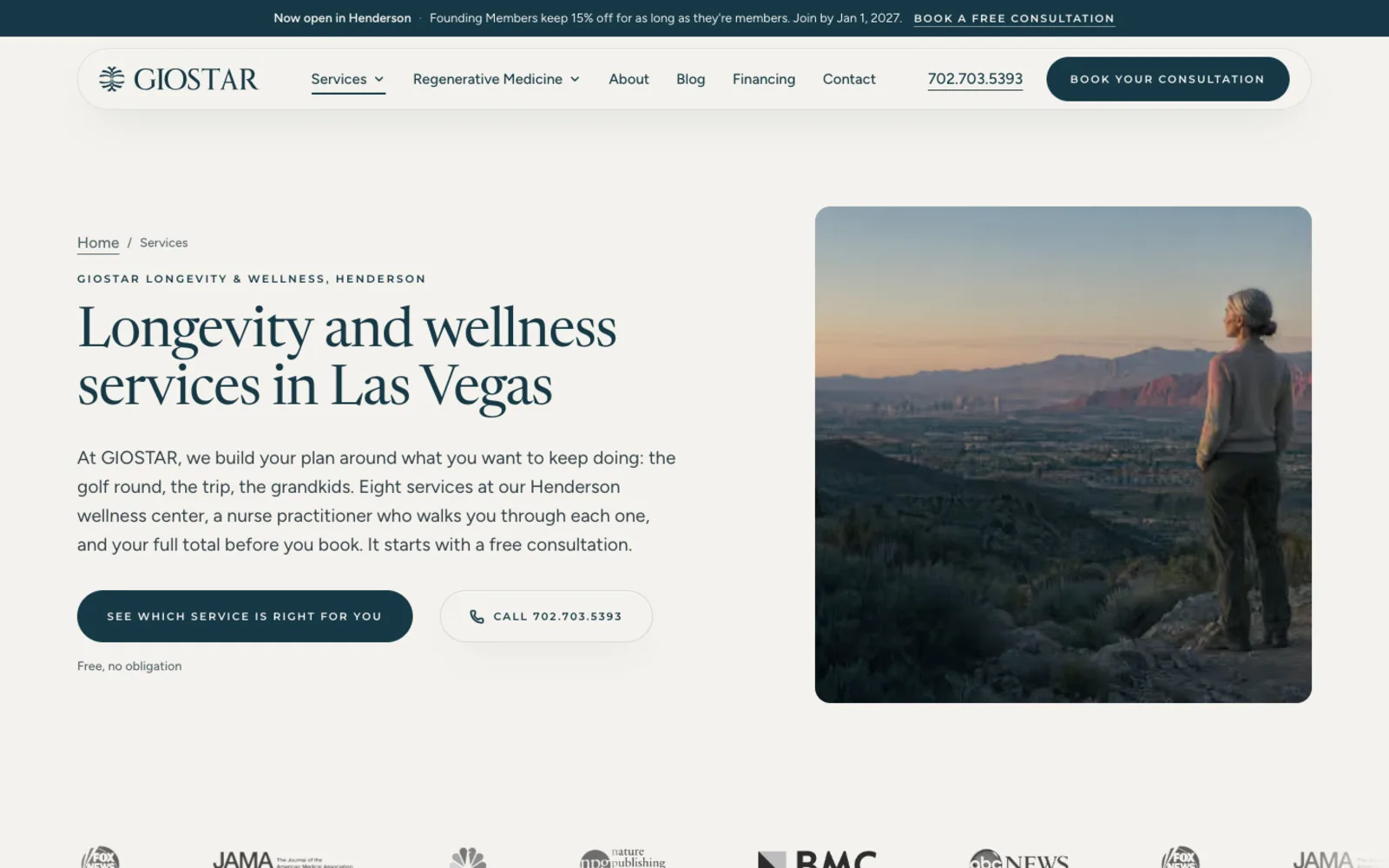
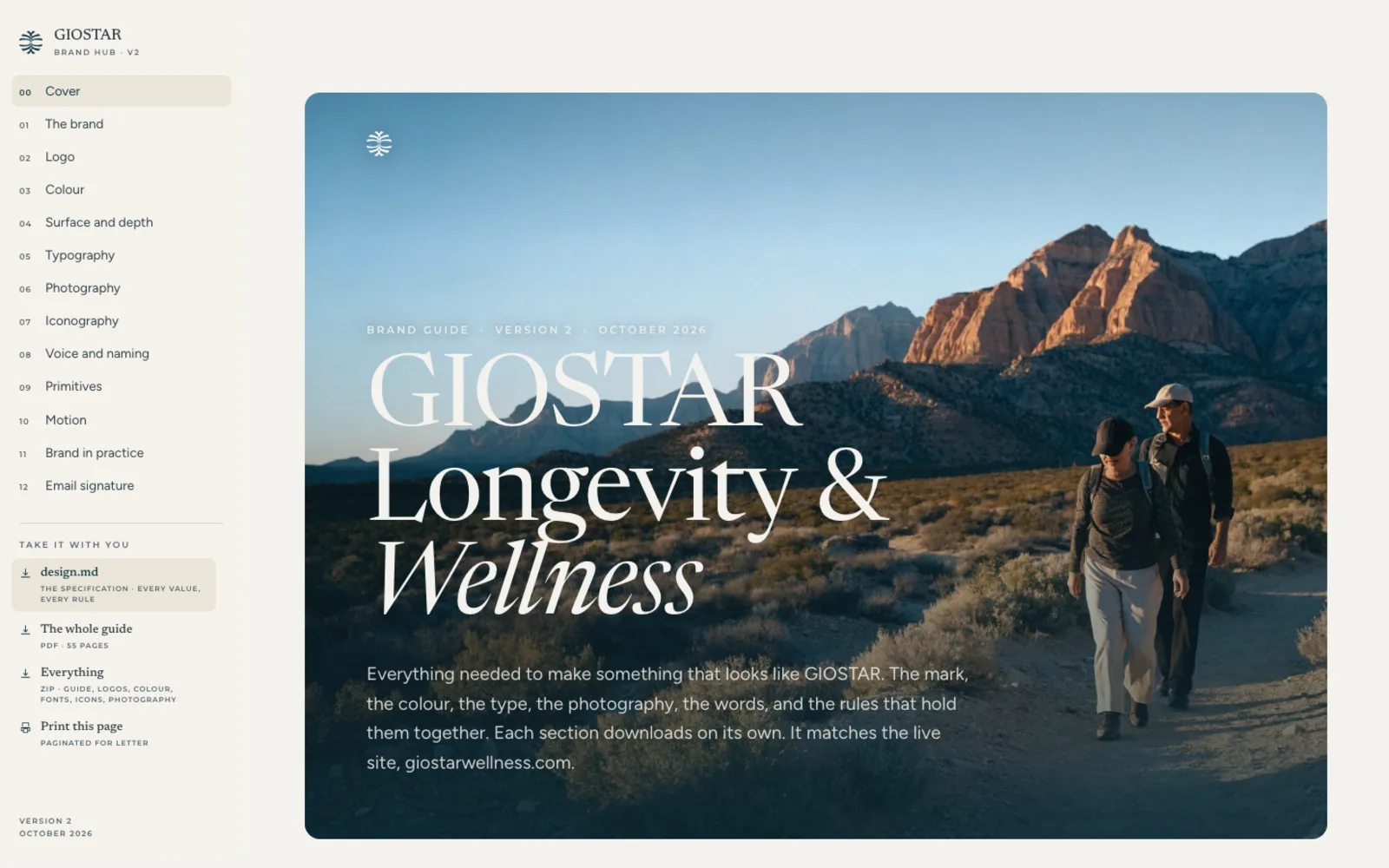
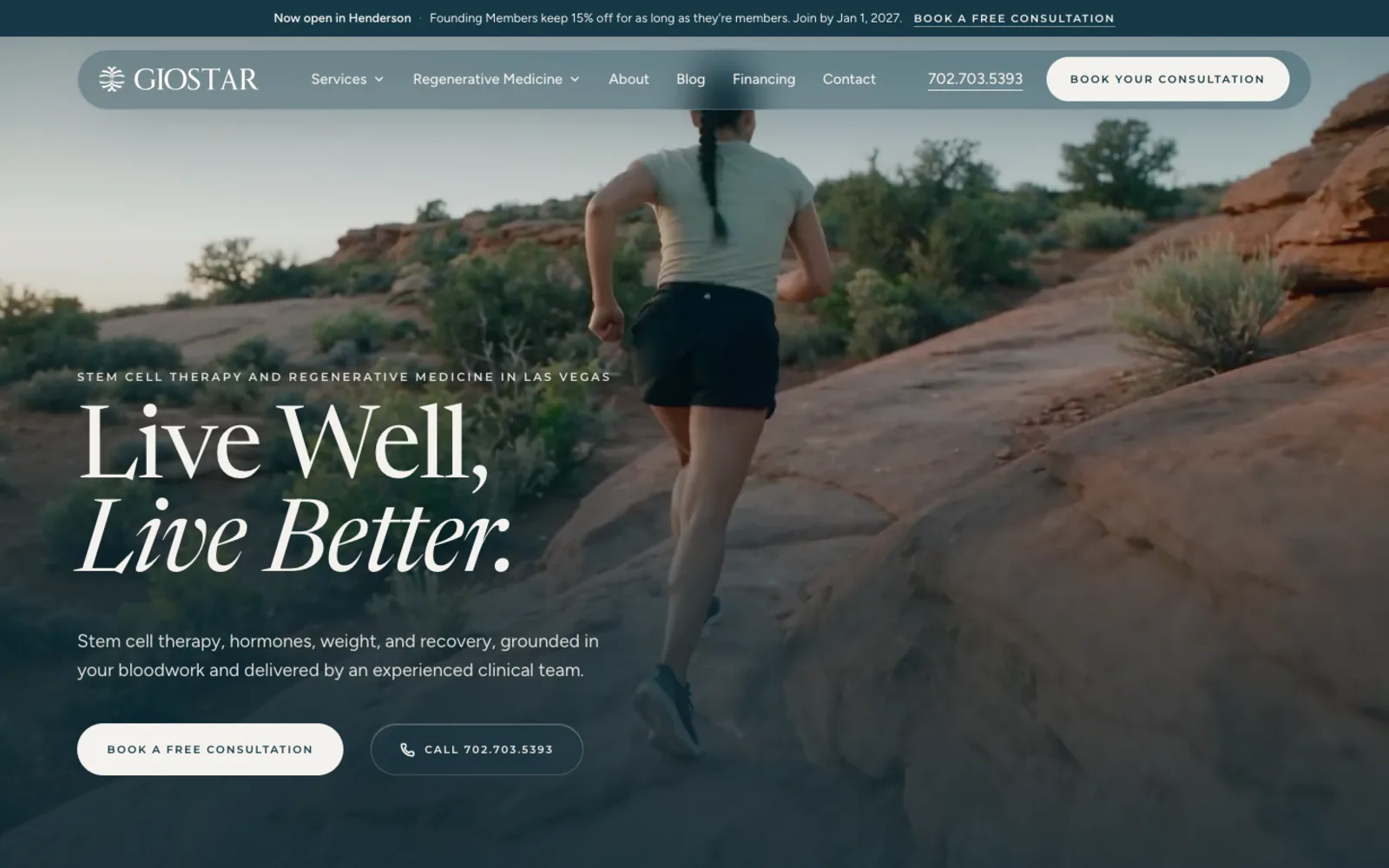
I built and run giostarwellness.com for a regenerative medicine and wellness clinic in Henderson: every service page, online booking, financing and a blog. A website lead is tracked end to end, from the form to a booked consult to an active patient, with no manual steps. I also built its live brand hub, so every page, post and print piece pulls the same colours, type and rules.
See the live sitePortfolio Examples
More of the work
Website build · Las Vegas
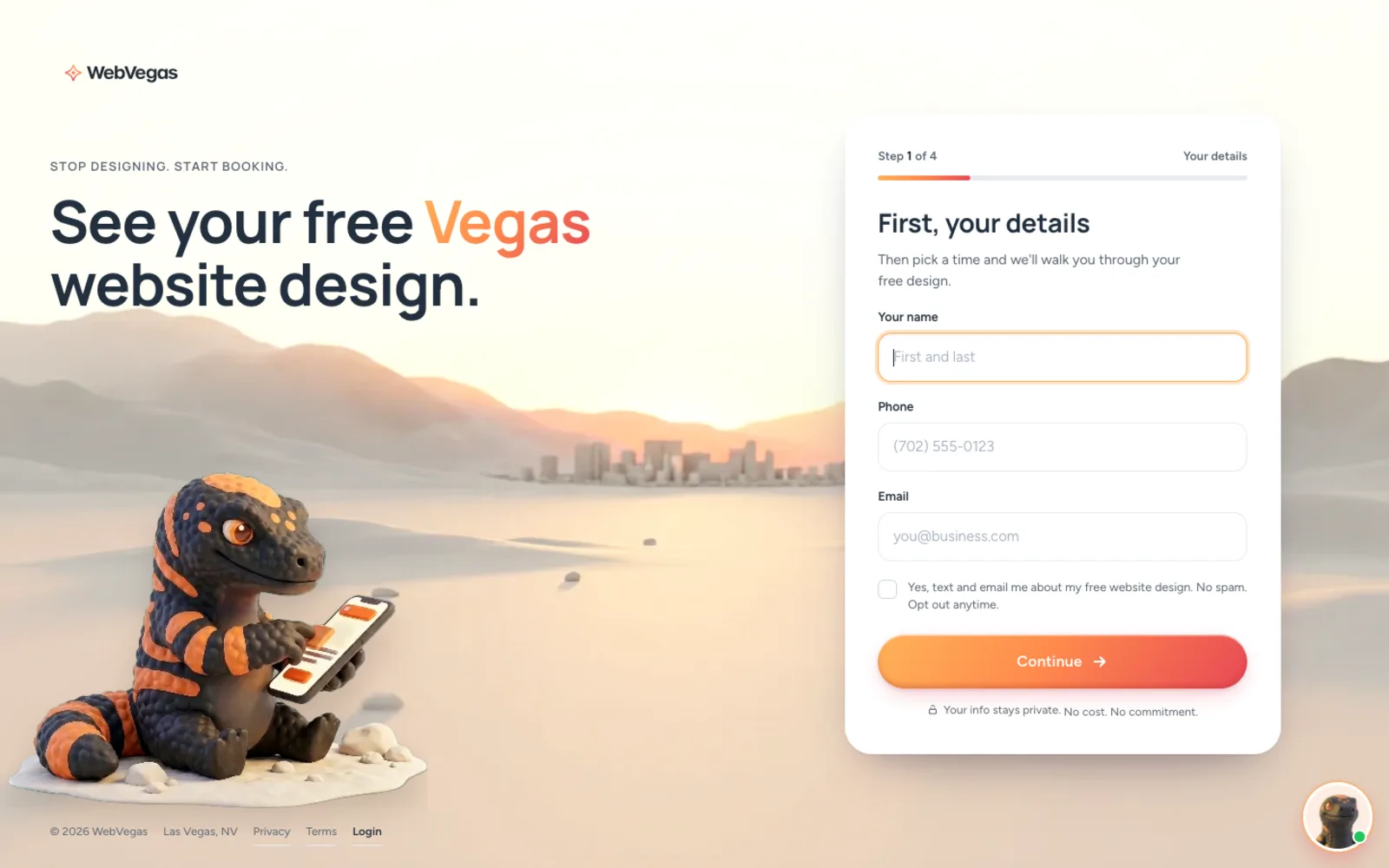
WebVegas: a Las Vegas web design brand and its booking funnel
See the live site

Brand mark · Event venue
Desert Inn Oasis: the refined mark and the plan for the new site
Site in build

Brand identity · Pharma
Mili Pharma: the butterfly mark and the lockups
Site in build
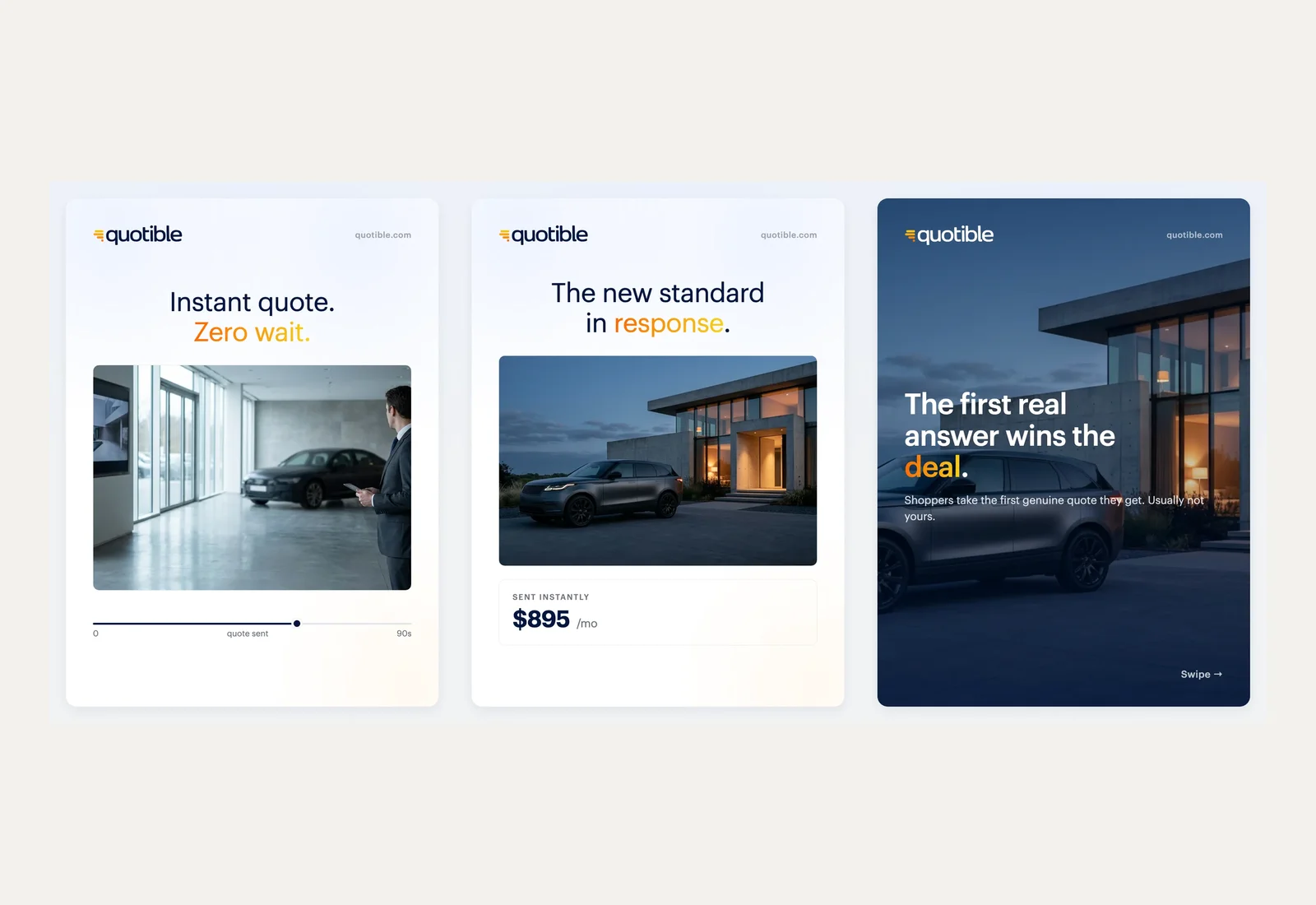
Social content system
Quotible: a testimonial-led social series
Content system

Want me to look at your site first?
A free audit, and a same-day reply from Justin, personally.
Competitive Analysis Client Reviews
What clients wrote on Google
- ★★★★★
After going back and forth on whether to bring in outside help, we ended up working with Justin for some AI consulting on how to structure our operations. He laid out a clear plan, didn't overcomplicate it, and we've been running smoother since. Good fit for a service business. He knows Las Vegas and he knows this stuff.
Kristen S. · Google
- ★★★★★
Justin joined our team a few months before opening to replace a marketing agency that wasn’t performing. He stepped up fast. Within weeks he launched a fully redesigned website with new brand guidelines, built and delivered our marketing plan and AI strategy, and helped implement our system architecture so we could open on time. Since then, he’s made several critical enhancements to the site that helped us generate revenue in our first month. His engagement was supposed to end at opening, but he became such an integral part of our leadership team that we kept him on to help evolve our marketing and tech strategy as we grow. He’s easy to work with, pushes back when it matters, and moves easily between strategy, delivery, and operations depending on what’s needed. If you’re looking for a deeply experienced, knowledgeable, and dedicated marketing, AI, or technology consultant, I highly recommend Justin Harris AI Consulting.
Devin R. · Google
- ★★★★★
Justin has been a true Gem to have as part of our company. His professionalism, immediate attention to branding and extensive details in marketing has made so much improvement on our business. We are forever grateful to have such and amazing marketing asset and cannot thank you enough Justin!
Desi W. · Google
- ★★★★
Justin Harris was very helpful in resolving some issues we had with our Webflow website.
Kristy F. · Google
- ★★★★★
I had the pleasure of working alongside Justin and consistently saw firsthand the level of dedication and professionalism he brings to his work. He was always the first one in the office, setting the tone with his strong work ethic and commitment to excellence. What stood out most was how deeply he cared about every client. He approached each project with thoughtfulness, expertise, and a genuine drive to deliver meaningful results. He combines sharp technical knowledge with a practical, solutions-oriented mindset, which makes him especially effective in the AI space. Any organization looking for thoughtful, reliable, and highly skilled AI consulting support would be in great hands working with him!
Jenevine Y. · Google
- ★★★★★
Hired him to manage our AI systems and it's been pretty smooth. He knew what needed to be done and got it handled without a lot of back and forth. Good experience for our service business.
BC G. · Google
- ★★★★★
I follow Justin on social media and read about his work and his contributions to the AI industry. He really knows how to use the technology in creating a system that allows you to make your business work more efficiently and effectively.
Ana J. · Google
- ★★★★★
Justin was the person I would go to for advice about AI automation for my workload. He knew the subject well and didn't overcomplicate it. For anyone in Las Vegas running a service business and wondering if AI systems are worth looking into, talking to him first is a great move!
Yaneliz M. · Google
- ★★★★★
Working with Justin is always a pleasure. He is professional, trustworthy, and consistently delivers outstanding results. As a longtime Las Vegas local, he has an exceptional knowledge of the territory and truly understands the market. I highly recommend his services to anyone who is serious about growing their business!
k C. · Google
- ★★★★★
From what I've seen, Justin knows the AI automation space better than most people I've come across in Las Vegas. He's the kind of person who actually understands the technical side and can explain it without making you feel lost. Good guy, good reputation.
Afaryn F. · Google
- ★★★★★
I've Known Justin for a while now and he really knows his stuff when it comes to AI consulting. If people in Las Vegas were to ask me for recommendations in this space, he's the best guy for the job, hands down.
Mickey S. · Google
- ★★★★★
After going back and forth on whether to bring in outside help, we reached out to Justin for some AI consulting advice on where our service business could actually use automation. He was straightforward about what made sense and what didn't. Ended up being a useful conversation. Las Vegas has no shortage of people claiming to be experts, and he's one of the few who could back it up.
Vincent M. · Google
- ★★★★★
Known Justin for a few years now and the guy actually knows his stuff when it comes to AI automation. Friends in the Las Vegas service business space keep asking me who to call and I always point them his way.
Chris M. · Google
- ★★★★★
Justin is one of those guys who actually knows what he's talking about and doesn't cut any corners. Will definitely be working with him again.
David S. · Google
- ★★★★★
Justin knows what he's doing highly recommend using his service he will treat you right and give you tremendous value !👍
Gregory J. · Google
- ★★★★★
Known Justin for a many years and the guy actually knows what he's talking about when it comes to AI and automation. Not the type to just throw buzzwords around. Based in Las Vegas and well connected in the space. …
cindy D. · Google
- ★★★★★
Known Justin for a few years now. Guy knows the AI space better than most people I've come across, especially here in Las Vegas where there's no shortage of people claiming to be experts. He actually understands how AI automation works at a practical level, not just the theory. The kind of person who gives you a straight answer with kindness and patience
Katelyn H. · Google
- ★★★★★
Knew Justin before he started building AI systems for businesses, and watching what he's put together is genuinely impressive. He built out an AI automation setup for my website in Las Vegas and it changed how we handle leads completely. The guy actually runs this stuff himself, so he knows what works.
Justin E. · Google
Competitive Analysis Reviews
What clients said about my work
Yaneliz M. wrote that I "didn't overcomplicate it" when she asked for advice on AI automation for her workload. Competitive work is judged the same way. A report that a principal can read in one sitting, and act on the next morning, is the standard I set.
Customer reviews of the rivals are read as a set rather than one by one. Patterns across twenty or thirty reviews show what buyers value and what they resent, and that shapes the offer.
Local Competitor Mapping in Las Vegas
Who competes for the Valley's buyers
In Las Vegas, the competitor set changes by neighborhood and by service. A firm in Henderson competes for different buyers than one in the Strip corridor, even when both offer the same service. The report separates the Valley into the areas your buyers actually come from, and maps which competitors show up in each.
Where a competitor has a page for a neighborhood, the report checks whether that page contains real local detail or only a city name swapped into a template.
Local listings and map results matter here. The report checks the business profiles of each competitor, the categories they chose and the reviews they hold, then compares those to your own listing so the gaps are visible.
Local rivals are mapped by neighborhood and by the service area each one claims. Gaps in that map show the parts of the valley where a business can win calls without a larger budget.
Reviews and Reputation Gaps
Where reviews decide the choice
Buyers compare firms on reviews before they compare them on price or service. The report counts reviews by competitor, looks at how recent they are and reads what buyers praise and complain about. The answer shows which claims buyers already make for the competitor and which they make against it.
A firm with many reviews from one part of the Valley can still look thin to buyers in another, so the review count is read alongside where the reviews come from. It also checks how each competitor replies to a review. A calm, specific reply to a complaint tells a buyer more than a long page of promises. The report recommends how to ask for reviews and how to answer them, using wording the firm can stand behind.
Review patterns show what customers praise and complain about in each rival's listing. The useful part is the complaint that repeats, because that is the gap a business can answer on its own site.
Ad Competitor Research
What competitors bid for and say
Paid results show which competitors are willing to pay for the terms you want. The report records which competitors appear in ads for your core searches, what their ads promise and where the click lands. That shows which pages a competitor is betting on and which search terms are already crowded. The ad review is a snapshot, so the report states which ads were seen on the day of the check and does not treat them as a permanent record.
Paid ads are read through the ad library: which rivals run the same offer for months, which change their message each week and which have stopped. Long-running ads usually earn their budget.
- Which competitors buy ads for your core service terms
- The headline and offer each ad makes
- The landing page each ad sends the click to
- Terms that are crowded and terms that are open
Competitor Website Speed and Technology
How fast and how built
A competitor's site can be slow, hard to use on a phone or missing the basic signals that search engines look for. The report checks load speed, mobile layout and the technical setup of the main pages. These findings matter because a buyer who cannot load a page will not wait to compare it with the one that loads.
Speed and structure are checked on each rival's main service page, using the same test on every site. The result is a list of what slows a page down and what makes it hard to scan, not a score for its own sake.
Market Positioning Statement
The claim the firm can own
After the research, the report proposes a positioning statement: one sentence that says who the firm serves, what it does better than the set and what proof backs the claim. The statement is tested against the competitor pages, so it does not repeat a claim three competitors already make.
A positioning statement that cannot be backed by proof on the site is cut. The report lists the proof the firm needs to add before the claim goes on a page. Where a claim is strong but unproven, the report marks it as a goal for the next quarter rather than a line of copy.
The positioning statement is written after the research, not before. It states who the business serves, what it does better than the closest rival and the proof it can show, in plain words a sales call can use.
What Competitive Analysis Is Not
What the report leaves out
A competitive analysis is not a prediction of which firm will win, and it is not a guarantee that a change will move a ranking or bring a call. It shows where the competitors are stronger, what they do well, and which changes are worth testing. The results of those changes are measured after they go live.
A report that promises a specific rank or a specific number of calls is making a claim the research cannot back, and it should be questioned before it is signed.
How Much Does Competitor Analysis Cost
How the quote is built
I quote a fixed price for a written scope after a free look at the firm's market and the services in scope. The scope lists the competitor set, the number of pages reviewed, the depth of the search review and the report format, so the cost is known before the research starts.
The fee depends on how many rivals are reviewed, how many channels are checked and whether the report includes a follow-up call. The quote names each of those inputs before any work starts.
- Number of competitors in the set
- Number of pages reviewed on each site
- Search and ad review depth
- Review or working session included or not
Competitive Analysis Las Vegas NV
Every part of the Valley, by ZIP code
Las Vegas
89030 · 89101 · 89102 · 89104 · 89106 · 89107 · 89108 · 89109 · 89110 · 89117 · 89124 · 89128 · 89129 · 89130 · 89131 · 89134 · 89138 · 89143 · 89144 · 89145 · 89146 · 89149 · 89166
Henderson
89002 · 89005 · 89011 · 89012 · 89014 · 89015 · 89044 · 89052 · 89054 · 89074 · 89120 · 89122 · 89123 · 89183
North Las Vegas
89030 · 89031 · 89032 · 89081 · 89084 · 89085 · 89086 · 89101 · 89115 · 89130
Summerlin
89128 · 89134 · 89135 · 89138 · 89144 · 89145 · 89148 · 89161
Spring Valley
89102 · 89103 · 89113 · 89117 · 89118 · 89146 · 89147 · 89148 · 89178
Paradise
89074 · 89102 · 89103 · 89109 · 89118 · 89119 · 89120 · 89121 · 89123 · 89158 · 89169 · 89183
Enterprise
89113 · 89118 · 89119 · 89123 · 89139 · 89141 · 89148 · 89178 · 89179 · 89183
Sunrise Manor
89104 · 89110 · 89115 · 89121 · 89122 · 89142 · 89156
Boulder City
89005 · 89044
Competitive Analysis Work in the Valley
Where I meet firm owners
Firm owners in the Valley can meet me at their office when a review session needs a room, and the rest of the work runs over shared documents and calls. Local competitors are checked on the ground through their listings, maps and public pages, so the report reflects the Valley as buyers see it.
The Valley is not one market. A firm can rank well for buyers in one part of town and barely appear for buyers in another, so the competitor set is built for each area separately and a finding in one area is not carried into another without a check. The report also records the area each competitor's listing claims, so the set can be checked against the map.
Local work starts with the service area and the terms that the nearest buyers type. The map of rivals is then built around that area, not around a national list of brands.
Related Services for Competitive Research
Services that follow the research
Competitive Analysis Cost and Timing
Cost, timing and the scope
Competitive Analysis Questions for Principals
Questions asked before the research starts
How the Findings Are Scored
A ranking that shows effort and impact
Every finding in the report gets two scores: how much it would move the buyer's decision, and how much work it takes to change. The scores are written as plain words, high, medium or low, with the reason for each one, so nobody has to trust a number they cannot see.
Findings that score high on impact and low on effort go to the top of the list. Findings that score high on effort, such as a full site rebuild, are placed in their own section so they do not crowd out the quick fixes. Findings with low impact are left out, even when they are easy, because a short list gets done.
Each finding is scored on expected effect, cost to act on and how quickly the change would show up. The highest-scoring items form the first month of work.
- High impact, low effort: do this month
- High impact, high effort: scope it as a project
- Low impact: drop it from the list
- Unclear impact: test before deciding
Proof, not promises
Case studies I can show you
The AI Marketing System I Run My Own Business On
A done-for-you AI marketing system in Las Vegas: a multi-agent workforce that runs your web, ads, follow-up, content, and reporting. You approve, it executes.
Read the case studyNurseForward: A Full Agency's Output on One Approval Chain
A full paid-acquisition funnel on one approval chain: landing page, ad strategy, creative, and graphics. NurseForward's top ad hit a 7.56% CTR at $0.31 CPC.
Read the case studyThe Content Waterfall: A 13-Step Approval Chain Where High-Confidence Content Auto-Publishes
An AI content system that runs a 13-step approval chain: high-confidence pieces auto-publish, the rest route to one human gate. The same engine I run on my own brand.
Read the case studyRelated Marketing Services
Other research I run beside this
Start With the Competitor Set
A short call before any research
Tell me the services you want to win, the areas your buyers come from and the firms you already watch. I will reply in writing with the competitor set I would start from and what the research would cost, whether or not the firm hires me. The reply is yours to keep and nothing is charged for it.